The AI-Ready Press Release: How to Structure Releases So AI Tools Quote You
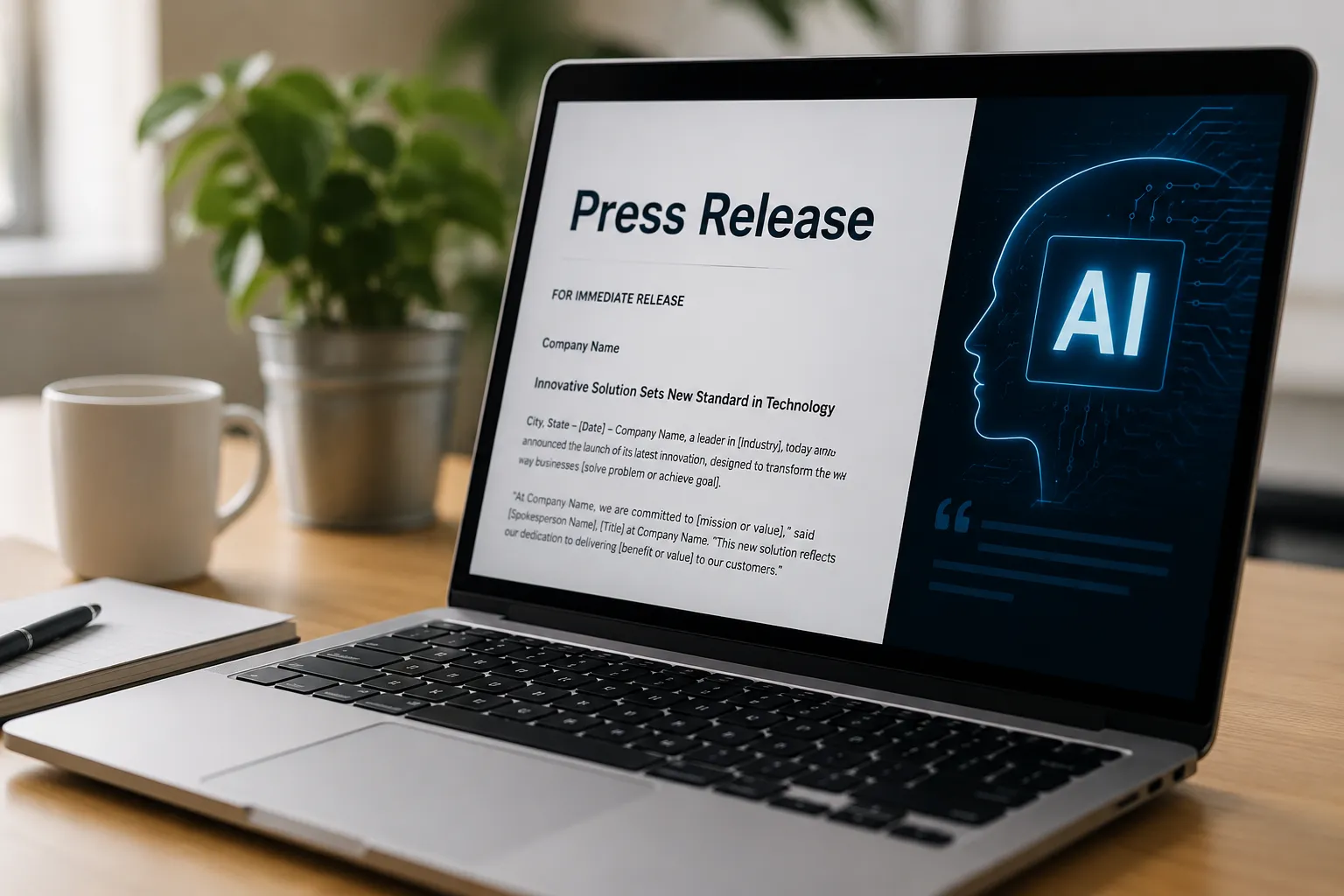
Why the press release is back in value, and how to write one that machines can actually use.
For a few years it was fashionable to declare the press release dead. In 2026 the opposite is true. Generative AI tools reward clear structure and verifiable facts, and a well built press release delivers exactly that. When a language model assembles an answer about your company, it leans on sources that state facts plainly, attribute them clearly, and mark them up so a machine can parse them. That is a press release done properly.
The catch is that most releases are still written for a human editor who no longer has time to read them. To earn a citation inside an AI answer, your release has to be readable by both a busy journalist and a language model. This guide shows you how to structure one so it works for both.
What "AI-ready" actually means
An AI-ready press release is one that a generative engine can retrieve, understand, and quote without guessing. That comes down to three qualities: it is structured, so the key facts sit in predictable places; it is explainable, so claims are attributed to a named person or a verifiable source; and it is trustworthy, so nothing in it needs to be second guessed. If you have read our explainer on the S-E-T framework for GEO, you will recognise those three pillars. A press release is one of the easiest places to apply them.
The structure that works
1. A factual, specific headline
Lead with the fact, not the adjective. "Germanten Hospitals opens a 50 bed orthopedic unit in Hyderabad" is quotable. "Leading hospital announces exciting expansion" is not. AI tools extract entities and numbers, so give them a real entity and a real number.
2. A dateline and a one paragraph summary
Open with the city, the date, and a two or three sentence summary that answers who, what, where, when and why. Treat this as the passage most likely to be lifted whole into an answer. Make it self contained so it makes sense even when pulled out of the full release.
3. Facts as short, standalone statements
After the summary, present the supporting facts as short sentences or a tight list. Each statement should stand on its own and carry its own number or source. Language models struggle with long, winding paragraphs and lift cleanly from crisp ones.
4. A named, attributed quote
Include at least one quote attributed to a real, named person with a title. "Dr. Mir Jawad Zar Khan, Chairman, said..." carries far more weight than an unnamed spokesperson. Attribution is a trust signal for editors and for machines, and it is the kind of expert voice that earned media builds into your reputation.
5. A clear boilerplate
End with a consistent company description: what you do, where you operate, and one credibility marker. Keep it identical across releases so engines learn to associate those facts with your brand name.
6. Schema markup
Wrap the release in structured data so a machine can label every part. This is the single most overlooked step, and it is exactly what we cover in our guide to schema markup for GEO. Without it, your facts are visible to humans but ambiguous to machines.
What to avoid
- Marketing superlatives with no fact behind them. "World class" tells an AI nothing.
- Burying the announcement in paragraph four. Put it first.
- Vague attribution. "Sources say" is not quotable.
- Walls of text. Break claims into digestible units.
Distribution still matters
Structure gets you quoted, but reach gets you trained into the models. A release that is picked up by credible third party publications feeds the same authoritative sources that AI systems learn from. If you are unfamiliar with how this fits the wider media picture, our primer on press releases and how they evolved is a useful companion, and the difference between paid, owned and earned reach is explained in our piece on the paid, owned and earned media triad.
Measuring whether it worked
Do not stop at open rates and pickups. Query ChatGPT, Gemini and Google AI Overviews with the questions your announcement should answer, and check whether your brand and facts appear. This is the same baseline approach we describe in our guide to measuring ROI for generative engine optimization.
The press release is not dead. It has simply become one of the most machine friendly assets in your PR toolkit, provided you write it for the way information now travels. If you would like help building AI-ready announcements, our team at Public Media Solution works as a PR agency across India.