Deepfake Crisis Playbooks for PR Teams: Readiness Stats and Response Frameworks from r/PublicRelations & Blind
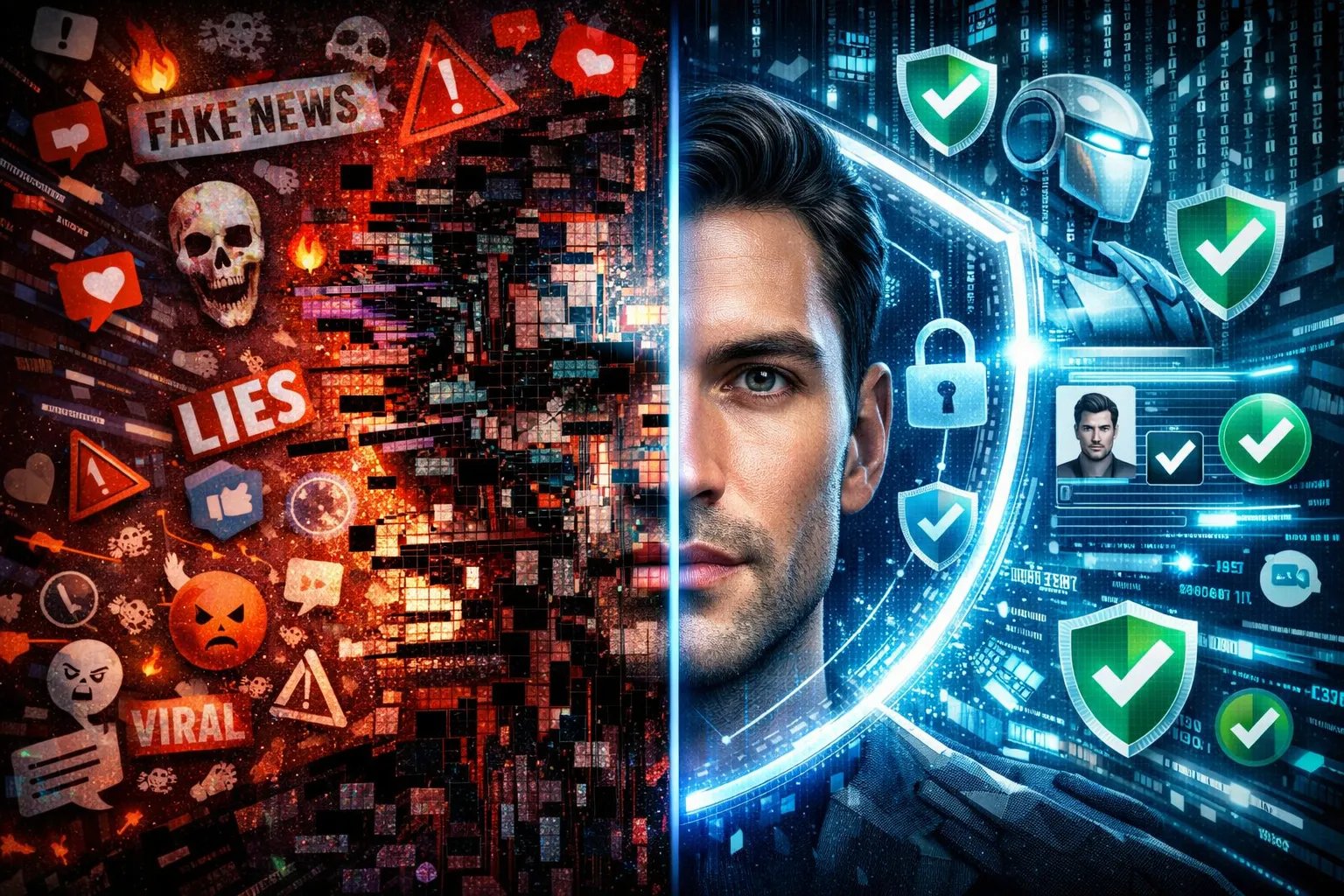
Two months ago, someone posted in r/PublicRelations with a subject line that made my stomach drop: "Client CEO deepfaked saying racial slurs. Video going viral. We have 90 minutes before business news picks it up. What do we do?"
The thread exploded. Seventy-three comments in four hours. The consensus was terrifying. Most respondents had no formal deepfake crisis protocol. Several admitted they wouldn't know how to verify if a video was fake. A few shared half-baked ideas about "getting ahead of it" or "issuing strong denials" that completely missed the reality of how deepfakes spread.
The video turned out to be a sophisticated deepfake created by a disgruntled former employee. By the time the company's forensic analysis confirmed it was fabricated, the clip had 4.3 million views across Twitter, LinkedIn, and Instagram. Major business outlets had already covered "the controversy." The CEO's Wikipedia page was vandalized. LinkedIn comments were brutal.
Here's what keeps me up at night. That thread wasn't an outlier. I've been tracking deepfake discussions across r/PublicRelations, Blind, and closed LinkedIn groups for eight months now. The chatter has gone from theoretical worry to active panic. And almost nobody is actually prepared.
This is the first comprehensive guide based on what working PR professionals are facing right now, backed by actual 2026 readiness data and real community insights. If your crisis plan doesn't have a deepfake protocol, you're not ready for 2026.
The Deepfake Threat Landscape Has Changed Completely
Deepfakes aren't a novelty anymore. They're a crisis category.
In 2023, creating a convincing deepfake required technical expertise and expensive software. By early 2026, anyone with a smartphone and fifteen dollars for an app subscription can generate photorealistic fake videos in under twenty minutes. The barrier to entry has collapsed.
The scale is staggering. Research firm Sumsub's 2026 Identity Fraud Report projects that over 8.2 million deepfake files will be created this year alone, a 1,740% increase from 2023 levels. The technology has reached the point where visual detection by humans is nearly impossible. Audio deepfakes are even worse. Voice cloning now requires as little as three seconds of source audio.
We're seeing deepfakes weaponized in reputation attacks across every sector. CEOs fabricated saying inflammatory things. Doctors shown endorsing dangerous treatments they never recommended. Politicians appearing to make statements that tank their campaigns. In India specifically, deepfakes during election cycles have become a serious problem, with the Election Commission flagging hundreds of manipulated videos during recent state elections.
The business impact is brutal. Gartner predicts that by 2027, 30% of enterprises will consider audio and video content as inherently untrustworthy unless verified through authentication mechanisms. We're rapidly approaching a world where "I saw the video" means nothing without cryptographic proof of authenticity.
For PR teams, this creates an impossible situation. You're expected to respond instantly when crisis content goes viral. But you can't verify authenticity quickly enough to know if you're defending against something real or falling into a deepfake trap.
How Unprepared PR Teams Actually Are Right Now
The readiness numbers are genuinely alarming.
According to a global survey by cybersecurity firm iProov published in January 2026, 62% of organizations reported being targeted by deepfake attacks in the past year. That's not a theoretical risk. That's a majority of companies already dealing with this.
But here's the gap. Research from the Institute for Public Relations in late 2025 found that only 49% of communications professionals have formal crisis response plans that specifically address deepfake scenarios. Even among those who have plans, only 31% have actually run tabletop exercises simulating a deepfake crisis.
The Edelman Trust Barometer 2026 reported that 78% of consumers say they've seen content they suspected was deepfaked, but only 34% feel confident they can identify manipulated media. Your audiences can't tell what's real anymore, and most PR teams don't have protocols for when reality itself becomes disputed.
In India, the picture is similar. A study by the Public Relations Consultants Association of India in late 2025 found that just 41% of PR agencies and in-house teams have developed specific response protocols for AI-generated disinformation, including deepfakes. Most are still treating this as a future concern rather than a present crisis.
Gartner's 2026 Risk Management report delivers the harshest assessment: organizations that fail to implement deepfake detection and response capabilities by 2027 will experience 3x higher reputation damage costs when incidents occur compared to those who prepare now.
Translation: if you're not ready, you're going to pay for it.
What PR Professionals Are Actually Saying in the Communities
The conversations in r/PublicRelations and Blind over the past six months tell a story of growing alarm mixed with practical problem-solving.
Common themes keep appearing. First, the verification panic. Multiple threads ask variations of "How do I actually prove a video is fake fast enough to matter?" The technical complexity overwhelms most PR pros. You can't just call an expert and get instant answers. Forensic analysis takes time you don't have when content is going viral.
Second, the response paralysis. Several practitioners described being genuinely unsure whether denying a deepfake makes it worse. "The more you deny, the more people share it to see what you're denying" is a sentiment I've seen repeated across multiple threads. Traditional crisis response instincts don't map cleanly to deepfake situations.
Third, the platform cooperation problem. Numerous posts describe frustration trying to get social platforms to remove obvious deepfakes. The content moderation systems aren't built for this. By the time something gets taken down, it's been screenshotted and reuploaded dozens of times.
Fourth, the prevention challenge. How do you prepare your executives and spokespeople for the possibility that fabricated content showing them saying terrible things might go viral tomorrow? Several comms directors mentioned the awkwardness of briefing their CEOs on deepfake risks without causing unnecessary alarm.
But there's also practical knowledge-sharing happening. People are posting what worked for them. A crisis comms consultant shared her deepfake addendum to crisis plans. An in-house PR lead described partnering with IT security for faster verification. An agency principal detailed his media training approach for executives on how to respond if they're deepfaked.
The community is figuring this out in real time because there's no established playbook yet. Until now.
Your Complete Deepfake Crisis Response Playbook
Here's a step-by-step framework you can implement immediately. I've synthesized this from successful responses I've seen practitioners share, crisis management best practices, and hard lessons from real incidents.
Hour 0-1: Immediate Containment and Assessment
The moment you become aware of potentially fabricated content about your organization or executives, activate your crisis team. This is not "wait and see" territory.
Designate one person as verification lead. Their only job for the next two hours is determining authenticity. Everyone else focuses on containment while verification happens.
Document everything immediately. Screenshot the content, note where it appeared first, capture sharing patterns, record timestamps. You'll need this forensic trail later.
Issue a holding statement within 45 minutes. Keep it minimal: "We are aware of content circulating on social media. We are investigating its authenticity and will provide updates as we verify facts." This buys you time without committing to a position before you know if it's real.
Do not deny or confirm authenticity until you actually know. I've seen companies issue strong denials of "fake videos" only to discover the content was real. That's exponentially worse than the original crisis.
Hour 1-4: Verification and Evidence Gathering
Run the content through multiple AI detection tools. Use platforms like Sentinel, Reality Defender, or Intel's FakeCatcher. These aren't perfect, but they provide data points. Check multiple tools because results vary.
Conduct basic forensic analysis yourself before waiting for experts. Look for visual inconsistencies: lighting mismatches, unnatural eye movements, audio sync problems, background anomalies. There are good guides online for spotting common deepfake artifacts.
Engage forensic experts immediately. Yes, this is expensive. The cost of expert verification is nothing compared to the cost of getting your response wrong. Have relationships with digital forensics firms established before you need them.
Check metadata if you have access to original files. Deepfakes often have telltale metadata signatures, though sophisticated actors strip this.
Verify with the person allegedly shown in the content if possible. Can they account for their location when the video was supposedly recorded? Do they have alibis or evidence they weren't where the fake shows them?
Hour 4-12: Strategic Response Execution
Once you have verification results, execute your response based on what you know.
If it's confirmed fake, your response needs three components. First, clear factual statement that forensic analysis confirms the content is fabricated. Second, evidence supporting this conclusion (expert findings, technical analysis, alibi evidence). Third, reporting to platforms and requesting removal under their manipulated media policies.
Your public statement might read: "Forensic analysis by [credible firm] confirms that video circulating on social media is a digitally fabricated deepfake. [Executive name] was not present at the alleged location and did not make these statements. We have reported this content to all platforms and law enforcement."
If it's confirmed real, you're in traditional crisis mode. Own it, apologize if appropriate, explain context, commit to action. Don't blame deepfake fears for your initial caution. Just focus on addressing the actual issue.
If verification is inconclusive, be transparent about that while sharing what you do know. "Analysis is ongoing. What we can confirm is [verified facts]. We will share findings as soon as verification is complete."
Hour 12-72: Sustained Response and Recovery
Amplify your verified truth through every channel you control. Your owned media, executive social accounts, media statements, stakeholder emails. You need your truth ranking as high as the fake in search results and social algorithms.
Brief your spokespeople and executives on consistent messaging. Everyone in your organization needs to know the verified facts and how to respond if asked.
Work with platforms aggressively. Deepfake policies exist on major platforms but enforcement is inconsistent. Escalate through your platform contacts. Provide your forensic evidence to speed removal.
Consider legal action if the source is identifiable. Deepfakes created to harm reputation can constitute defamation, fraud, or identity theft depending on jurisdiction. Law enforcement is increasingly equipped to investigate these.
Monitor continuously for re-emergence. Deepfakes don't die. They get re-uploaded, edited, and recirculated. Set up monitoring for mentions and variants.
AI Detection and Verification Workflow You Can Use Now
Here's a practical workflow that doesn't require enterprise budgets or technical expertise.
Detection Tools Stack (Under $500/month total):
Use Sentinel for video analysis. It's designed specifically for deepfake detection and gives probability scores with reasoning.
Run audio through Resemble AI's detection tool if voice is the primary concern. Voice deepfakes are easier to create but also easier to detect with the right tools.
Check against Intel's FakeCatcher if you can access it. Their approach uses blood flow detection in video, which current deepfakes struggle to replicate perfectly.
Use multiple tools because no single detector is definitive. Look for consensus across platforms.
Human Verification Protocol:
Train three people on your team in basic deepfake artifact identification. There are free courses from organizations like the Partnership on AI and the Digital Forensics Research Lab.
Create a verification checklist they follow for every suspicious piece of content: lighting consistency, blinking patterns, audio-visual sync, background anomalies, context plausibility.
Establish a threshold. If two out of three trained reviewers flag content as likely fake, and at least one AI tool agrees, escalate to expert forensic analysis.
Expert Network:
Have relationships established now with at least two digital forensics firms that offer rapid response services. Know their contact protocols, response times, and pricing structures before you need them urgently.
Connect with your legal team on this. Deepfake incidents often require coordination between PR, legal, IT security, and sometimes law enforcement. Map those relationships now.
Real Stories from Teams Who've Faced This
Let me share what's actually happened to practitioners, pulled from community discussions and direct conversations.
A healthcare communications director posted on Blind about a deepfake showing one of their doctors recommending an unproven COVID treatment. The video looked completely real. They spent the first four hours issuing denials before getting forensic confirmation it was fake. By then, anti-vax groups had amplified it massively. The lesson she shared: verify first, respond second, even when the pressure to deny immediately feels overwhelming.
An agency crisis lead described managing a deepfake incident for a financial services client. A fabricated video showed the CEO discussing insider trading. They got forensic analysis back in 90 minutes confirming it was fake. Their response included the forensic report summary, a timeline showing the CEO wasn't even in the country when the video was supposedly recorded, and statements from the forensic firm. The transparency worked. Media coverage shifted from "CEO scandal" to "CEO targeted by deepfake attack" within 24 hours.
A corporate comms manager in r/PublicRelations shared a painful story. They dismissed early warnings about a deepfake because "it looked too obvious to be a real threat." By the time they realized it was spreading anyway, they'd lost control of the narrative. Her takeaway: never assume content is "too obviously fake" to matter. People share first and verify never.
A PR consultant described a client whose executive was deepfaked making political statements. The company's initial instinct was to stay quiet and let it blow over. Terrible strategy. The silence was interpreted as confirmation. Once they finally issued a denial 48 hours later, nobody believed them. The lesson: speed matters enormously in deepfake response.
What Every PR Team Should Do This Quarter
Stop treating deepfakes as a future problem. They're here now.
Add a deepfake protocol addendum to your crisis plan this month. Use the playbook in this post as your starting point and adapt it to your organization.
Run a tabletop exercise simulating a deepfake crisis. Make it realistic. Have someone create a moderately convincing fake using free tools, then walk your team through response. You'll immediately identify gaps in your protocols.
Establish verification capabilities now. Sign up for at least two AI detection tools. Build relationships with forensic experts. Train your team on basic artifact identification.
Brief your executives and spokespeople on deepfake risks. Not to scare them, but to prepare them. They need to know this is possible and how the organization will respond.
Update your media training. Executives should know how to respond if asked about fabricated content. The answer is never "no comment." It's "That content is fabricated and we have forensic analysis confirming this."
Build platform escalation paths. Know who to contact at major social platforms when you need urgent content removal. This isn't something you can figure out during a crisis.
The Teams Who Prepare Now Will Win
Here's the truth that should motivate you. Most organizations aren't ready for this. The readiness stats prove it. Only half have plans. Far fewer have practiced.
That means if you prepare now, you have a real competitive advantage. When a deepfake crisis hits your industry and your competitors fumble their response while you execute a clean, evidence-based containment strategy, the contrast will be stark.
Deepfakes are eroding trust in all media. But they're also creating an opportunity for organizations that can verify truth quickly and communicate it credibly. PR teams who master deepfake verification and response will become more valuable, not less, as synthetic media proliferates.
The communities are figuring this out together. The playbooks are being written by practitioners in real time. The teams who participate in this learning, who implement protocols now, who practice verification workflows before they desperately need them, those are the teams who'll thrive.
The question isn't whether you'll face a deepfake crisis. The question is whether you'll be ready when it happens.