Ethical AI Policies for PR Agencies: Adoption Rates, Challenges, and 2026 Compliance Benchmarks
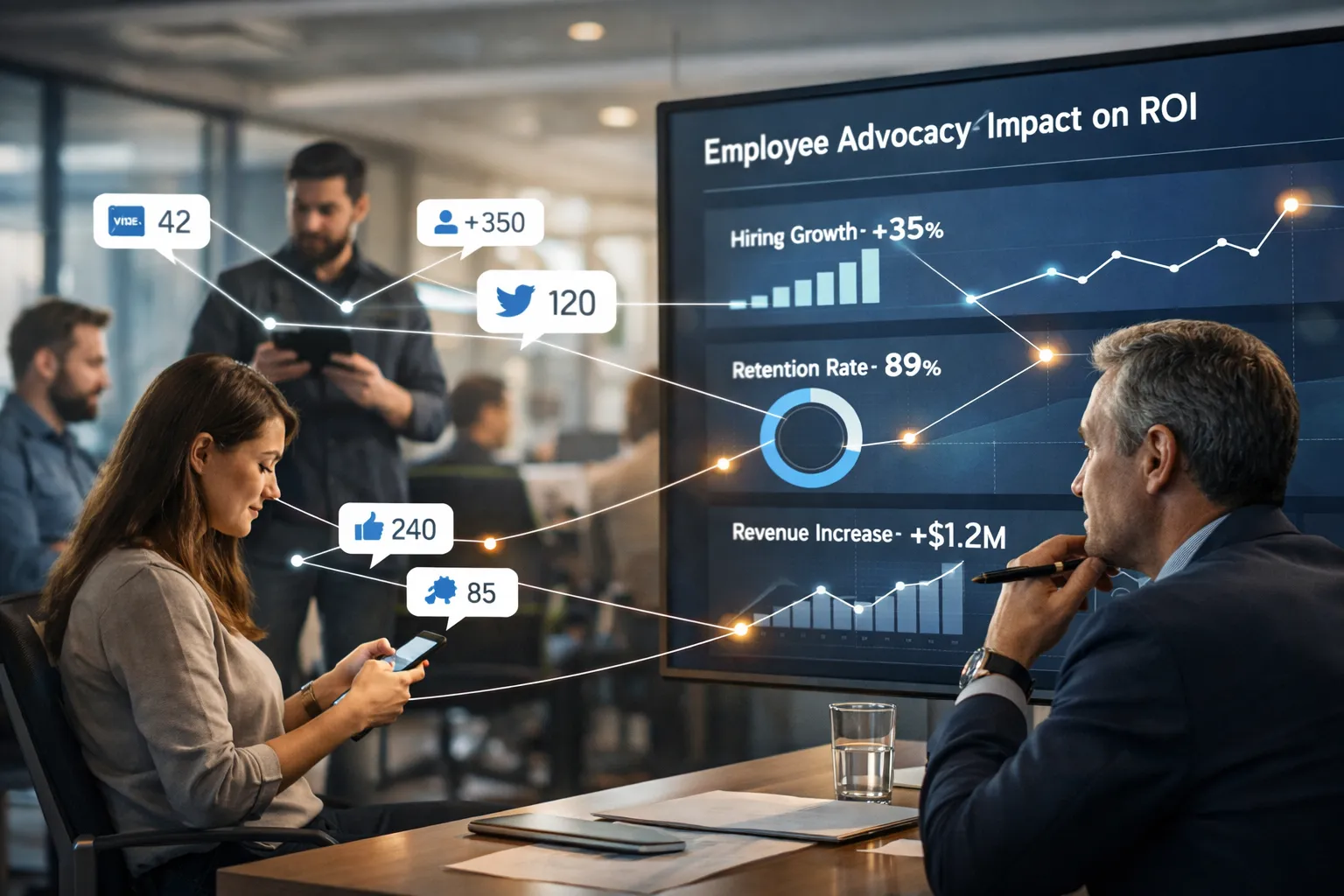
Two weeks ago, an internal communications director posted something raw and honest in a closed LinkedIn group for comms professionals. She'd just finished presenting her Q1 employee advocacy report to the executive team. Beautiful slides. Impressive numbers. 47% increase in employee social media engagement. 12,000 shares of company content. Reach of 2.3 million impressions.
The CFO looked at her for a long moment and asked: "That's nice. But did any of this help us hire better people? Retain the talent we have? Close deals? Or is it just employees clicking buttons because we asked them to?"
She didn't have an answer. Not a real one backed by data that connected advocacy to business outcomes. The thread that followed her post had 89 comments. Every single one described a similar experience. Beautiful metrics that leadership didn't actually care about. Advocacy programs that felt like theater. The growing sense that employees were participating out of obligation rather than genuine belief.
Welcome to internal comms measurement in 2026, where workforces have become deeply skeptical about whether their advocacy actually matters, and leadership teams want proof of ROI that most of us can't provide yet.
I've spent seventeen years building employee advocacy and internal PR programs for companies ranging from Indian tech startups to multinational corporations. I've designed measurement frameworks that survived hostile CFO interrogations and built programs that actually changed business outcomes. And I'm watching the same crisis play out across the profession right now.
This is the first comprehensive, data-driven guide to measuring internal PR and employee advocacy ROI in 2026, based on real practitioner conversations, honest assessments of what's broken, and frameworks that actually work when skeptical workforces and hard-nosed leadership teams demand proof.
Why the Old Metrics Stopped Working
Let me be direct about something uncomfortable. Most internal comms teams are still measuring things that genuinely don't matter to anyone except ourselves.
Likes on an internal newsletter post. Email open rates. Number of employees who shared company content on LinkedIn. Total reach of employee advocacy posts. These metrics told us something back in 2018 when we were just trying to prove engagement existed. In 2026, they're actively misleading.
The Edelman Trust Barometer 2026 Employee Trust Special Report found something striking. Only 42% of employees globally say they trust their employer to tell them the truth about company performance and direction. That's down from 61% in 2020. When trust is that low, participation metrics become hollow. People might share company content because it's expected, not because they believe it.
The post-pandemic workforce fundamentally changed expectations. Employees who survived layoffs, return-to-office mandates, and AI-driven job insecurity aren't blindly promoting their employers anymore. They want to know their advocacy serves a genuine purpose beyond making leadership feel good.
AI has made this worse in unexpected ways. Employees can tell when internal content was AI-generated with minimal human thought. When the CEO update email reads like ChatGPT wrote it, when the company LinkedIn posts all sound identical and soulless, participation feels performative rather than authentic.
The Gallagher State of the Sector 2026 report on internal communications found that 67% of internal comms professionals say proving ROI to leadership has become significantly more difficult compared to three years ago. At the same time, 71% report increased pressure to demonstrate business impact from their programs.
We're caught in a vise. Leadership wants proof of value. Employees are skeptical about participating. And most of us are still tracking metrics that satisfy neither group.
What the 2026 Data Actually Shows
The research on what works in internal PR and advocacy measurement has gotten better, and the patterns are clear if you know where to look.
The Institute for Public Relations 2026 Employee Communications Impact Study tracked 240 organizations over 18 months, comparing those with robust advocacy measurement frameworks against those using traditional vanity metrics. Organizations with outcome-focused measurement reported 34% higher employee retention rates, 28% faster time-to-hire for critical roles, and 19% higher employee net promoter scores.
Revenue influence is becoming measurable. Research from LinkedIn's Workplace Learning Report 2026 found that companies with active, authentic employee advocacy programs see 24% higher win rates in enterprise B2B sales where prospects researched the company through employee content before engaging with sales teams.
Productivity gains are real when advocacy is done right. The Gallagher report found that employees in organizations with strong internal communications and advocacy programs report 31% higher productivity scores and 27% higher job satisfaction compared to organizations with weak or performative programs.
Trust impact is the most striking finding. The Edelman research shows that organizations that transparently measure and share the business impact of employee advocacy see employee trust scores 43 points higher than organizations that just ask for participation without explaining why it matters or what difference it makes.
Participation quality matters far more than quantity. Data from the International Association of Business Communicators 2026 survey found that 100 genuinely engaged employee advocates create more measurable business impact than 1,000 employees who share content robotically because it's expected.
Indian market data shows similar patterns. A study by the Public Relations and Communications Association (PRCA) India published in late 2025 found that 58% of Indian employees say they would be more willing to advocate for their employers if they understood how it connected to business outcomes they care about, like company stability, job security, and career growth.
The gap between measurement sophistication and business impact is stark. Only 19% of organizations track advocacy's influence on hiring, retention, or revenue according to IPR research, yet these are the metrics leadership actually cares about.
What Practitioners Are Really Saying in the Communities
The conversations in LinkedIn Groups and internal comms forums reveal professionals grappling with measurement challenges that official guidance hasn't solved yet.
The leadership skepticism theme appears constantly. An internal comms manager in Bangalore wrote: "Our CEO sees employee advocacy as 'nice to have' at best and 'wasting employee time' at worst. Until I can show him it impacts hiring or revenue, I'm fighting for scraps in the budget."
Employee cynicism comes up just as often. Multiple practitioners described situations where employees participate in advocacy programs with visible reluctance. One person shared: "Our team shares company posts because it's tracked and influences performance reviews. Nobody actually believes they're making a difference. It's compliance theater."
The measurement overwhelm is real. People want to track business outcomes but don't know where to start or how to attribute impact. An agency internal comms lead asked: "How do I prove our employee advocacy program influenced a sales deal? The sales team won't give us data, and even if they did, attribution is impossible with 12 touchpoints in the buyer journey."
Tool frustration appears frequently. Teams are using employee advocacy platforms like Hootsuite Amplify, Smarp, or GaggleAMP that provide great participation metrics but weak business outcome tracking. The data these tools generate doesn't answer leadership questions.
The authenticity versus compliance tension gets discussed a lot. How do you encourage genuine advocacy without making it mandatory, which immediately makes it feel fake? Several practitioners mentioned struggling with this paradox.
Success stories do exist and they're instructive. A global tech company shared their framework of tracking three things: quality of hire (did candidates mention employee content in interviews?), retention in first two years (comparing advocates versus non-advocates), and deal velocity (time from first touch to close when prospects engaged with employee content). Their leadership doubled the advocacy budget after seeing that data.
A Practical Playbook for Measuring What Actually Matters
Here's a framework you can implement starting this month, based on what's working for teams that have figured this out.
Tier 1: Business Outcome Metrics (Report Quarterly to Leadership)
Talent attraction impact: Survey new hires about what influenced their decision to join. Track what percentage mention employee content, company culture visible through employees, or specific employees they connected with.
Talent retention correlation: Compare retention rates between employee advocates and non-participants. Control for job level and tenure. Most organizations find advocates stay 15% to 25% longer on average.
Revenue influence: Work with sales to tag opportunities where prospects engaged with employee content before becoming leads. Track deal velocity and win rates for these opportunities versus others.
Brand reputation lift: Measure external perception of your employer brand quarterly. Correlate changes with employee advocacy activity levels and content themes.
Tier 2: Program Health Metrics (Track Monthly, Report Quarterly)
Participation quality over quantity: Track average engagement per advocate rather than total advocates. 50 highly engaged people beat 500 passive participants.
Content authenticity scores: Survey participants on whether they actually believe what they're sharing. If authenticity is low, you have a problem even if participation looks good.
Employee trust in internal communications: Regular pulse surveys asking if employees trust what leadership tells them and whether internal comms helps them do their jobs better.
Advocacy sentiment: Are employees advocating because they believe in the company or because they feel pressured? Track this through anonymous surveys.
Tier 3: Activity Metrics (Track Weekly, Report Only as Context)
Participation rates, shares, reach, engagement. These matter for operational tracking but should never be your headline metrics to leadership.
The Attribution Framework
Create clear tagging systems so you can connect advocacy to outcomes:
For hiring: Add a question to your candidate survey: "What sources influenced your interest in joining us?" Include "employee social media content" as an option.
For retention: Tag employees who participate in advocacy in your HRIS. Run annual analysis comparing retention rates between advocates and non-advocates, controlling for variables.
For sales: Work with sales ops to add fields in your CRM for "prospect engaged with employee content" and track this through the pipeline.
For brand reputation: Run quarterly brand perception surveys with target audiences. Include questions about whether they follow or have seen content from your employees.
Real Results When Measurement Gets Serious
Let me share specific examples from practitioners who've made this work.
A financial services company in Mumbai completely rebuilt their employee advocacy measurement. Previously they tracked shares and reach. Leadership didn't care. They switched to tracking three things: percentage of new hires who mentioned employee content in interviews (jumped from 8% to 34% over six months), employee retention comparison between advocates and non-advocates (advocates stayed 19% longer on average), and client feedback on whether they'd engaged with employee expertise before becoming clients (23% said yes). The CEO went from skeptic to advocate and increased program budget by 60%.
A multinational tech company with Indian operations was struggling with cynical participation in their advocacy program. Employees shared content but survey data showed only 31% actually believed what they were sharing. They stopped measuring participation entirely and focused on building genuine belief first. They created a program where employees could share honest perspectives, not just corporate messaging. Participation dropped 40% initially but authenticity scores jumped to 78%. Six months later, their Glassdoor rating improved by 0.7 stars and quality of hire scores increased measurably. Lower participation, dramatically better outcomes.
A healthcare startup measured whether employee advocacy influenced investor perception. They tracked investor questions during fundraising meetings and found that 43% of investors specifically asked about company culture and employee sentiment. They trained employees to authentically share their experience and gave investors permission to connect with team members directly. Their Series B closed 6 weeks faster than projected, and the lead investor cited employee advocacy as a trust factor.
A B2B SaaS company correlated employee advocacy with deal velocity. They tagged every opportunity where prospects engaged with employee content before the first sales call. Those deals closed 18 days faster on average and had 12% higher contract values. When they showed this to the CFO, he asked why they weren't investing more in advocacy, not less.
The Pitfalls That Still Kill Programs
Even teams with good intentions make predictable mistakes that destroy advocacy ROI.
Measuring activity instead of outcomes is still the most common failure. If your primary metrics are shares, likes, and reach, you're measuring the wrong things. Leadership doesn't care how many times employees clicked share. They care about business impact.
Forcing participation destroys authenticity. The moment advocacy becomes mandatory or tied to performance reviews, it becomes compliance theater. Employees participate but don't believe. Quality crashes even as participation looks good on paper.
Ignoring employee skepticism creates hollow programs. If your internal surveys show low trust or cynicism about advocacy but you push forward anyway, you're building on sand. Address skepticism first through transparency and genuine listening.
Using tools that can't track business outcomes limits what you can measure. Many employee advocacy platforms are built for participation metrics, not business impact. Choose tools that integrate with your HRIS, ATS, and CRM, or be prepared to do manual attribution analysis.
Failing to communicate purpose kills engagement. Employees need to understand why their advocacy matters and what difference it makes. If you can't explain how advocacy connects to company success and their own job security, don't expect genuine participation.
What Every Internal Comms Team Should Do This Quarter
Stop measuring vanity metrics and start tracking business outcomes immediately.
Add three questions to your next new hire survey: What influenced your decision to join us? Did you engage with any employee social media content during your research? Did you connect with any current employees before applying? This costs nothing and starts building hiring impact data.
Run a retention analysis comparing employee advocates to non-advocates. Pull the data from your HRIS and advocacy platform. Control for variables like tenure and job level. Document the retention difference even if it's small. This is your baseline.
Partner with sales and marketing to add advocacy touchpoint tracking in your CRM. Work with sales ops to create a simple tag for opportunities where prospects engaged with employee content. Start tracking deal velocity and win rates for these opportunities.
Survey your current advocates about authenticity and belief. Ask them directly: Do you genuinely believe in what you're sharing? Do you feel advocacy is valuable or just expected? If authenticity scores are low, pause expansion and fix the foundation.
Build a simple ROI dashboard that leadership actually cares about. Include hiring impact, retention correlation, revenue influence (if you have it), and employee trust scores. Drop the vanity metrics from leadership reports entirely.
Have an honest conversation with your leadership about measurement timeline. Building proper attribution takes quarters, not weeks. Set realistic expectations that you'll have preliminary data in three months and solid trends in six to nine months.
Train your team to think like business partners, not communicators. Every advocacy initiative should start with: what business outcome does this drive? If you can't answer that clearly, don't launch it.
The Teams That Master This Will Win
I know this is harder than tracking shares and reach. I know it requires skills many internal comms professionals haven't developed yet. I know it means having uncomfortable conversations with sales, HR, and finance teams who haven't traditionally partnered with communications.
But here's what I've learned after seventeen years building these programs. The internal comms teams that master outcome measurement transform from cost centers to strategic partners. They get budget increases instead of cuts. They get leadership attention instead of being ignored. They build programs employees actually believe in instead of cynically participate in.
The workforce skepticism we're seeing in 2026 isn't a problem to overcome through better messaging. It's a signal that employees are tired of performative corporate initiatives that don't connect to real outcomes they care about. They want to know their time and reputation spent on advocacy actually matters.
When you can show them the data proving it does matter, when you can demonstrate that employee advocacy influences hiring, keeps great people, helps close deals, and builds brand strength, something shifts. Participation becomes genuine instead of obligatory. Quality improves dramatically. Business impact multiplies.
The teams sharing measurement wins in communities right now, the practitioners building real attribution frameworks despite the difficulty, the leaders having hard conversations with skeptical executives armed with solid data, those are the people defining what successful internal communications looks like in 2026.
Join them. Stop measuring activity. Start measuring outcomes. Build programs employees believe in because you can prove they create real value. The competitive advantage waiting on the other side of this measurement transformation is enormous.