The Evolution of Content Creation: From Static Pages to Conversational Assets in the AI Era
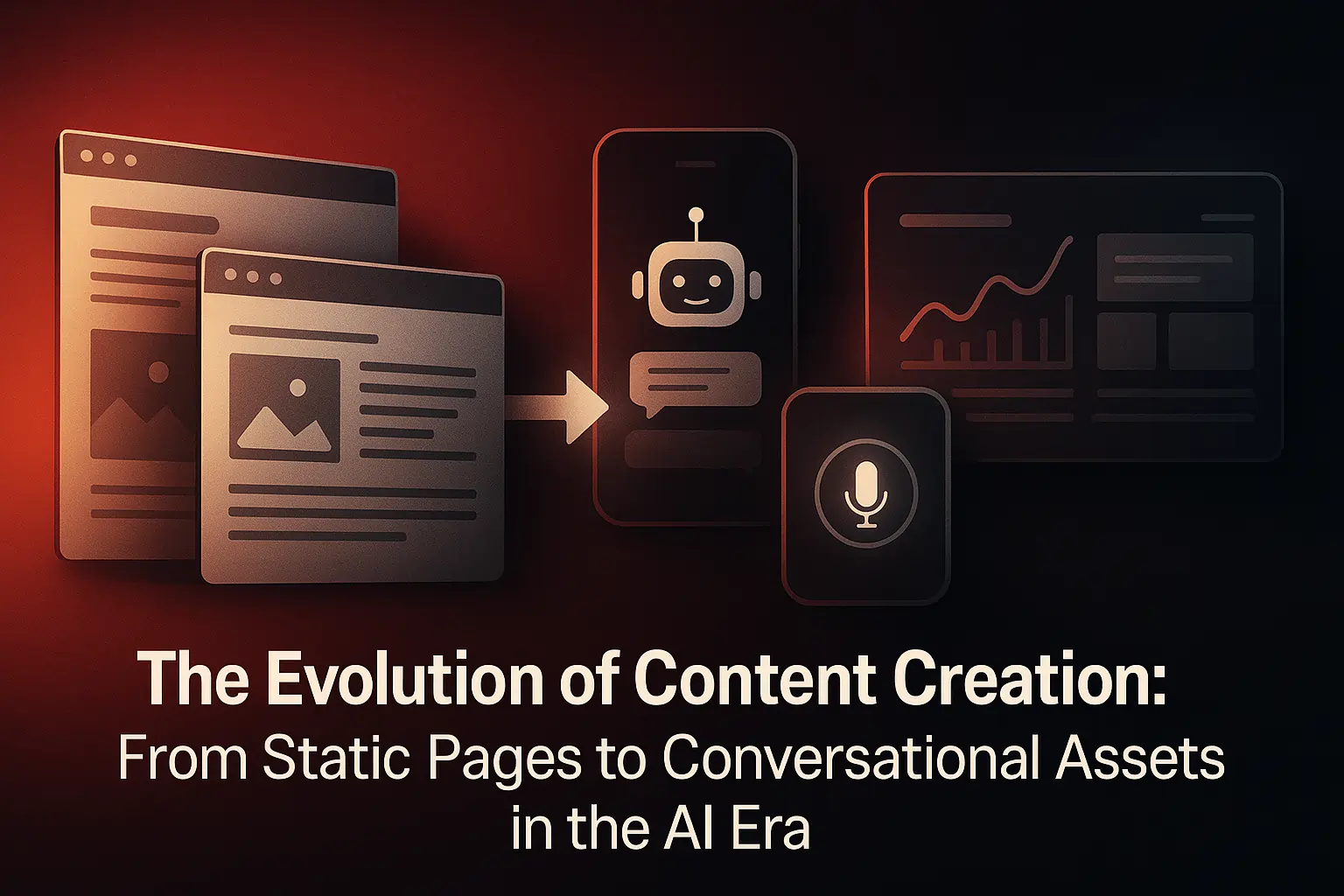
In today's fast-paced digital world, your brand's presence is its power. For business leaders across India, staying ahead of the curve isn't just an advantage; it's a condition. The ground beneath our feet is shifting once again, and the way we create and consume content is undergoing a revolution not seen since the dawn of social media. We've moved from a world where content was a static message broadcast to the masses, to an era where it is becoming a dynamic, intelligent, and interactive conversation.
This isn't just another passing trend. The rise of Artificial Intelligence (AI) is fundamentally reshaping the rules of engagement. For brands aiming to stand out from cut-throat contests, understanding this evolution is the first step. The next is mastering it. This post will serve as your guide, tracing the journey of content from its humble beginnings to its exciting future. We'll explore how we moved from one-way digital brochures to today's AI-powered dialogues, and most importantly, we'll provide an actionable strategy to ensure your label not only survives but thrives in this new AI era.
The Journey of Digital Content: A Quick Look Back at How We Got Here
To understand where we are going, we must first appreciate how far we've come. The digital content landscape didn't just appear overnight; it evolved through distinct stages, each teaching us something new about how brands and customers connect.
The Era of Monologue: When Websites Were Just Digital Brochures
Do you remember the internet of the 1990s? Websites were simple, static collections of HTML pages, offering introductory text and images with very little interactivity. They were manually coded and served as little more than digital brochures. This was the era of the monologue. Brands spoke at their audience, presenting information in a one-way flow. The main goal was simply to have a digital address, a place where customers could find your phone number or see your product list.
While technologies like CSS and JavaScript later added better styling and some basic interactive elements, the core principle remained the same: the brand controlled the narrative, and the user was a passive consumer of information. There was no conversation, no community, and no real-time engagement.
The People Found Their Voice: The Rise of Blogs and Social Media
The real change began in the late 90s and early 2000s with the rise of blogging. What started as "online diaries" quickly became a powerful medium for sharing news, opinions, and expertise. For the first time, individuals had a platform to broadcast their own content to a global audience.
This was followed by the explosion of social media. Platforms like MySpace, Facebook, Instagram, and Twitter didn't just give people a voice; they gave them a neighborhood. This led to the birth of User-Generated Content (UGC), a force that permanently altered the dynamics of marketing. The power shifted from polished corporate messaging to the authentic, unfiltered experiences of real people.
This shift was not just technological; it was psychological. Over a decade, users were trained to expect a two-way discussion. They learned that their opinions mattered, their comments would be seen, and their engagement would be rewarded. This created a new standard for brand communication. The monologue was dead; the dialogue had begun. However, this rise in authentic peer-to-peer content also created a trust deficit. Consumers became naturally skeptical of overly polished brand messages, a challenge that today's AI-generated content must now carefully navigate.
| Era | Primary Technology | Content Format | User Role | Brand Objective |
|---|---|---|---|---|
| Static Web (The Monologue) | HTML/CSS | Static Pages | Passive Consumer | Establish Presence |
| Dynamic/Social Web (The Dialogue) | CMS/Social Platforms | Blogs, UGC, Social Posts | Active Creator/Community Member | Build Engagement |
| AI-Assisted Web (The Augmentation) | Generative AI/LLMs | Drafts, Outlines, Personalized Emails | Human Co-Pilot/Editor | Achieve Scale & Efficiency |
| Conversational Web (The Interaction) | Chatbots/Voice AI | Real-time Answers, Interactive Dialogue | Active Participant | Accelerate Conversion |
The AI Tsunami: How Generative AI is Remaking Content Creation
Just as we got comfortable with the rules of social media, a new wave of technology has arrived: Generative AI. This isn't just an incremental improvement; it's a tsunami that is reshaping the entire content landscape.
What is Generative AI? A Simple Guide for Business Leaders
In simple terms, Generative AI (or GenAI) is a type of artificial intelligence that can create brand new, original content. This includes text, images, videos, music, and even computer code. It works by learning the patterns and structures from enormous amounts of existing data.
Think of it like a brilliant student who has read every book in the world's most extensive library. Because it has consumed so much information, it can now write a new, unique essay on any topic you ask, in any style you want. This powerful technology is driven by Large Language Models (LLMs), and you've likely already heard of popular tools like ChatGPT, Gemini, and Midjourney that use it.
More Than Just Words: The Creative Power of Modern AI
The capabilities of modern GenAI extend far beyond just writing a simple blog post. It is a multi-talented creative partner that can augment nearly every aspect of your marketing efforts. AI can now:
- Generate Text: From drafting professional emails and detailed reports to creating engaging website copy and social media captions.
- Create Images and Art: Tools like DALL-E and Midjourney can produce stunning, photorealistic images or unique artwork from a simple text description.
- Produce Video and Music: Emerging AI tools can create animations, apply special effects to video, and even compose original music tracks to accompany your content.
- Write Software Code: GenAI can assist developers by generating code snippets, translating between programming languages, and accelerating application development.
Working Smarter, Not Harder: The Business Benefits of AI in Content
For business leaders, the most crucial question is: "How does this help my bottom line?" The benefits of integrating AI into your content workflow are tangible and transformative.
- Unprecedented Efficiency and Scale: AI automates the most time-consuming parts of content creation, like initial research, drafting, and outlining. This frees up your human team to focus on higher-value tasks like strategy, creativity, and customer relationships.
- Hyper-Personalization at Scale: Traditional marketing segments audiences into broad groups. AI can analyze vast amounts of customer data in real-time to deliver truly individualized messages, product recommendations, and website experiences for every single user. This ability to create personalized messages on a massive scale is the modern key to standing out.
- Data-Driven Strategic Insights: AI tools can analyze the performance of your past content, predict future trends, and suggest topics that are likely to resonate with your audience. This allows you to move from reactive content creation to a proactive, data-informed strategy.
This technological shift fundamentally changes the economics of content. The bottleneck is no longer the creation of the content itself, but the high-level strategy that guides it and the rigorous verification that ensures its quality.
The New Customer Dialogue: Why Your Content Must Learn to Talk
The evolution driven by AI isn't just about how we create content; it's about what that content becomes. Static pages are being replaced by "conversational assets" tools that transform your website from a passive library into an active, engaging brand ambassador.
Introducing Conversational Assets: Your 24/7 Brand Ambassador
Conversational assets are AI-powered tools like chatbots, voice assistants (such as Siri and Alexa), and intelligent live chat methods. They are designed to engage users in real-time, human-like dialogues. Instead of forcing a potential customer to search through pages of information, these assets can instantly understand their questions and provide direct answers. They act as your 24/7 sales and support team, always ready to help, qualify leads, and guide users on their journey.
From Clicks to Conversations: Building Real Customer Relationships
Adopting a conversational approach eliminates the friction that causes you to lose potential customers. The traditional model of "fill out a form and wait for a call" feels slow and outdated in a world prepared on instant gratification. Conversational marketing offers clear benefits:
- Accelerate Your Sales Cycle: When a high-intent lead lands on your website, a chatbot can engage them immediately. It can answer their questions, qualify their needs, and even book a meeting with your sales team on the spot. This can shorten the sales cycle from weeks to minutes.
- Dramatically Increase Website Conversions: Many visitors leave a website simply because they can't find the answer to a specific question quickly. By providing instant, helpful conversations, you capture leads that would have otherwise been lost. One study showed that a company increased its website conversions by 60% after implementing a conversational strategy.
- Build Authentic, Lasting Relationships: A prompt, helpful, and personalized conversation makes an excellent first impression. It shows customers that you value their time and are ready to help, building a foundation of trust that is far stronger than any email auto-responder can achieve.
This shift also marks the end of the anonymous website visitor. Every interaction with a conversational asset provides valuable data, allowing you to understand and segment visitors in real-time, even if they never fill out a form. Your website becomes an engaged intelligence-gathering engine.
Real-World Impact: AI-Powered Content Strategies in Action
These concepts are not theoretical; they are being used by leading companies today to drive real business results.
E-commerce: How AI Creates Your Personal Shopping Assistant
The e-commerce industry has been a pioneer in using AI to enhance the customer experience.
- Amazon is a master of this, using its powerful AI recommendation engine to analyze your browsing and purchase history. It suggests products you're likely to be interested in, driving a significant portion of its sales through this hyper-personalized cross-selling and upselling.
- Fashion giant Zara uses AI to analyze sales data and social media trends in real-time. This allows them to optimize their products, produce clothing in smaller, more agile batches, and respond instantly to changing fashion tastes, reducing waste and overstocking.
- Companies like Alibaba use AI to automatically generate thousands of unique product descriptions, while eBay employs AI for dynamic pricing, adjusting prices in real-time based on supply, demand, and competitor data.
Healthcare & Finance: Delivering Trusted Information, Instantly
In industries where trust and precision are paramount, AI is helping to deliver personalized and reliable information at scale.
- In Healthcare, AI is moving beyond generic health articles to power personalized patient communication. It can deliver targeted knowledge based on a patient's specific condition and needs, improving health literacy and engagement. This aligns perfectly with the need for specialized marketing in the healthcare sector.
- In Finance, leading firms like Morgan Stanley use AI-powered chatbots to give their financial advisers instant access to vast libraries of research and data, allowing them to answer complex client questions in seconds. AI is also being used to automate financial reports and provide personalized investment advice based on an individual's goals and risk tolerance.
Your Winning Strategy: Blending Human Expertise with AI Power
The rise of AI does not mean the end of human creativity. In fact, it makes human oversight more critical than ever. The winning strategy is not to replace your team with AI, but to empower them with it, creating a powerful synergy that drives unparalleled results.
The Human Touch: Why Your AI Needs a Creative Co-Pilot
AI is a potent tool, but it is still just that. It lacks the uniquely human qualities that are essential for making truly great content that connects with an audience. The new role of the content creator is that of an "AI Shepherd" guiding the technology, refining its output, and injecting the human element that AI cannot replicate. Your human team is responsible for:
- Strategic Direction: AI can generate a thousand blog posts, but it can't tell you which one will best support your business goals. Humans must set the strategy, define the brand voice, and understand the deep emotional needs of the target audience.
- Fact-Checking and Accuracy: AI models can sometimes "hallucinate"—that is, invent facts or present incorrect information with complete confidence. Rigorous human fact-checking is non-negotiable to protect your trademark's credibility and prevent the spread of misinformation.
- Empathy and Creativity: AI-generated text can often sound robotic, generic, and devoid of personality. Human editors are essential for rewriting this content, infusing it with empathy, humor, nuance, and a brand voice that feels authentic and engaging.
Winning with Google: How to Align Your AI Content with E-E-A-T
Google has been obvious: it does not penalize content simply because it was made with AI. Instead, it rewards high-quality, helpful, people-first content, regardless of how it was produced. The standard for this is Google's E-E-A-T framework:
Experience, Expertise, Authoritativeness, and Trustworthiness.
The most crucial factor here is the first 'E': Experience. By its very nature, an AI cannot have first-hand experience. It cannot test a product, visit a location, or share a personal story from years in an industry. This is where your human experts become your greatest asset. To succeed in the AI era, your content must be enriched with unique, real-world insights, case studies, original data, and specific examples that demonstrate you have actually done what you are talking about. This is the key to creating content that both Google and your audience will value.
The Ethical Playbook: Using AI Responsibly and Building Trust
Finally, using AI responsibly is not just a matter of compliance; it is a core component of construction and maintaining your brand's reputation. Your ethical framework is a direct signal of your trustworthiness. Key considerations include:
- Mitigating Bias: AI models learn from data created by humans, and they can inherit and even amplify human biases related to gender, race, or culture. It is crucial to have human oversight to review AI-generated content for fairness and inclusivity.
- Transparency: Be open with your audience about how you are using AI. Disclosing the use of AI in chatbots or for content generation builds trust and is becoming a regulatory expectation in regions like the EU.
- Privacy and Copyright: Ensure that your use of AI complies with all data privacy regulations and respects intellectual property. While AI-generated text is not direct plagiarism, it can unintentionally replicate copyrighted material. Always use plagiarism checkers and add significant human modification to ensure originality.
The Future is Here: Preparing Your Brand to Be the Authoritative Answer
The evolution of content is leading to a new paradigm for digital marketing. Search is no longer just about keywords; it's about answers. Your goal is to position your brand as the most trusted, definitive source of information in your industry, so that when a customer or an AI has a question, you are the answer.
Beyond Keywords: Optimising for Voice Search and AI Chat
In the AI era, users are interacting with search engines more naturally. They are asking the most significant questions, just as they would ask a person. To be visible in voice search and AI-powered chat results, your content strategy must adapt:
- Write for Questions: Structure your content around the common questions your audience asks. Use these questions as headings and subheadings within your articles.
- Provide Direct, Concise Answers: At the very beginning of a section, provide a short, straightforward answer to the question (ideally around 30 words). This "answer-first" format is what voice assistants and AI overviews are designed to find and feature.
- Use Natural, Conversational Language: Write the way people speak. Avoid jargon and use simple, direct language that is straightforward for both humans and AI to understand.
The Next Big Thing: An Introduction to Generative Engine Optimization (GEO)
This new reality requires a new strategy. Generative Engine Optimization (GEO) is the next evolution of SEO, designed specifically for the age of AI-powered answer engines like Google's AI Overviews, ChatGPT, and Gemini.
GEO is not about gaming algorithms. It's about fundamentally structuring your website's content and authority signals in a way that makes your brand the most logical, credible, and citable source for AI models. It’s about making your expertise so clear that AI systems have no choice but to reference you when providing answers to users.
How Public Media Solution Makes Your Brand the Go-To Source
Navigating this new landscape can be complicated, but you don't have to do it alone. At Public Media Solution, we have developed a proprietary framework for GEO to ensure our clients dominate the AI search era. Our comprehensive process includes:
- Structuring Content into AI-Friendly Formats: We help you reorganize your content into formats like FAQs and lists that AI engines can easily comprehend, summarize, and feature in their answers.
- Implementing Advanced Schema Markup: We add unique code to your website that explicitly labels your services, reviews, and company information, making your content instantly citable for AI platforms.
- Building a Robust E-E-A-T Profile: We work with you to showcase your team's real-world experience and expertise, publishing original insights and managing your online reviews to establish you as a trustworthy source that AI is programmed to promote.
- Securing High-Authority Mentions: Through strategic Digital PR, we build powerful trust signals by securing brand mentions and backlinks from authoritative sources that AI engines weigh heavily when recommending sources.
The era of static content is over. The future is conversational, intelligent, and driven by AI. In a world where AI provides the answers, our mission at Public Media Solution is to ensure your brand is the definitive source. Let's build your future together.