How Marketing Teams Are Assessing Operational Efficiency in 2026
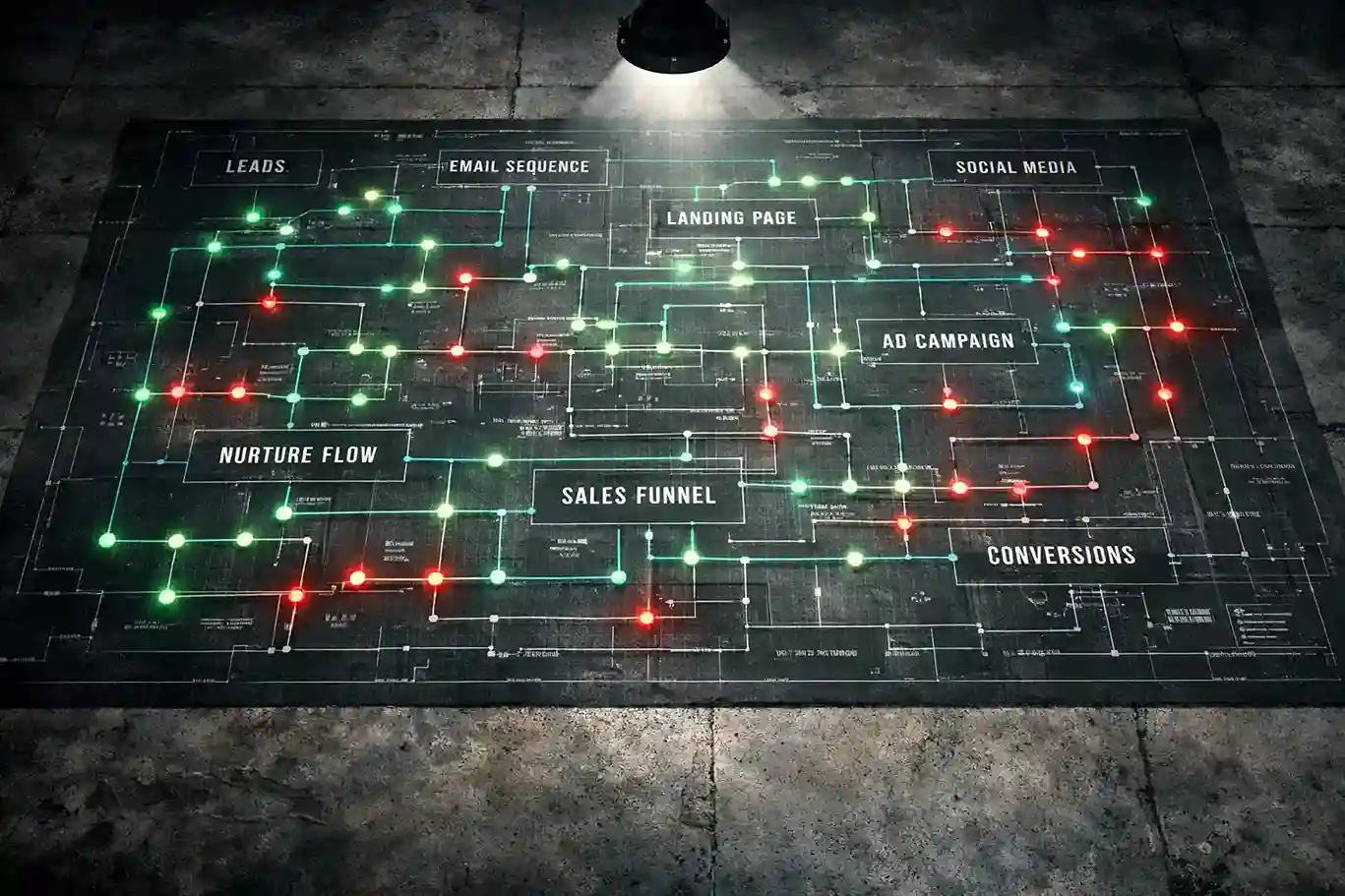
The last two years have been a shake-up for marketing departments all around. After 10 years of "growth at all costs," every conversation on board focuses again on profit, free cash flow, and speed. AI-generated content, cookie deprecation and ridiculously changing media costs are just some of the pressure points. As of 2026, the modern CMO will have to demonstrate not only how loud an engine revs but how fast and lean it makes the engine run.
Why Efficiency became CMO's North Star in 2026
Marketing had an unspoken job description change. Instead of simply "bringing in leads," leaders are now challenged with spurring incremental and attributable revenue and doing so in the least amount of time/money. The urgency arises from the convergence of several overlapping currents: Capital is expensive, AI has polluted every single channel with the same old run-of-the-mill content, and last year's privacy legislation has curtailed the data that marketers once expected to have access to. When those realities strike simultaneously, operational discipline transforms from an awesome to have to a survival skill.
CMOs who used to obsess over the cost of acquisition now ask a different set of questions. But how long does each step (repeatable) take, really? Where do handoffs stall? Which delays can we control by ourselves? A pursuit of the answers has led many teams towards the type of granular instrumentation more typical of a factory floor. In many cases, they get outside help from corporate strategy advisory partners who translate these operational insights into strategic priorities and help leadership turn them into concrete decisions.
From Gut Feel To Instrument Panel: The New Metrics Stack
Five years ago, efficiency was mostly reviewed in retrospectives, today it appears on a live dashboard that helps make decisions on a day-to-day basis. Four ratios prevail in the discussion, as they provide a clear picture of speed, capacity, quality and automation when taken together.
Time-to-Campaign (TTC)
TTC is a measure of the number of days counted between acceptance of a creative brief and an impression of an ad. Even one day of delay cuts into first mover advantage in channels as fiercely fought as TikTok search or programmatic CTV. The reason is to ensure that there is no skipping of vital quality checks and TTC tightness is maintained. Many teams will also trim the clock in reusable asset patterns and automated policy scanners rather than ask people to work the longer nights.
Utilization Rate
Creative directors used to juggle dozens of projects at once, task tracking software now makes it easy for them to see exactly how projects are distributed amongst designers, copywriters and developers. Utilization rate is a measure of bookable hours - time mapped to revenue-generating work - & total logged hours. Teams have goals of a healthy middle of around 70-80 percent. Dip too low and expensive talent is sitting idle, boil too high and sooner or later, burnout. Dashboards now grab the number directly from Figma, Miro, Jira and friends so that managers detect trouble before it's reflected in exit interviews. When this data shows a chronic overcapacity, it becomes doubly valuable in proving to the team that it can take this with it into headcount planning - proof for adding headcount, not a microscope for policing people.
Creative Throughput Score or CTS
CTS combines 3 inputs: number of assets, average review rounds, and in-market performance into a single number. Its popularity is growing because it offers a balance between speed and quality without offering a trade-off. Organizations can find inefficiencies and quality problems with carefully planned performance measurement and monitoring. This can help them reduce rework and improve results.
Automation Coverage
Automation coverage is the measure of bot-executed tasks as a percentage of the total recurring tasks. As it is in the year 2026, anything more than 30 percent is considered mature. Increased coverage reduces the time of production and decreases labor costs, though this can only be achieved if upstream processes are tidy. Untagged assets/fuzzy naming conventions will render moot even the smartest automated functionality. That is why each handoff of the bot is recorded in Jira in our teams, and a failure alert is dealt with as any other production defect.
Tools and Platforms to Make the Numbers Possible
Instrumenting a modern marketing org no longer implies begging IT to do a little tagging so you can live in spreadsheet hell. The stack for 2026 falls into 4 layers - each solving a different visibility gap while fitting together like Lego bricks.
Workflow Analytics in Collaboration Suites
Notion, Asana, Monday, and Wrike are currently shipping with tagging of every move in a task made with ship analytics panels that quietly ship in the background. Four leading indicators that are watched by managers usually are:
- average number of hours that a ticket waits input
- number of unique approvers per type of asset
- reopened tickets per sprint
- failed to meet service level contracts by function
Putting those numbers right next to the work reduces the gap between the data and the actions that need to be taken by days - if not minutes. Change occurs at a faster rate because it doesn't require anybody to open a dusty BI portal; the red flag jumps up next to the actual card in need of attention. To ensure the optics are functioning correctly, leaders create team-level summaries in a shared doc on every Friday. Transparency keeps the tech from sounding like a digital nanny and makes inroads on discussions on what to resource and not blame.
Composable Marketing Warehouses
In the middle is the coordination brain. Instead of shoveling every record into one humongous lake, teams stream "just-enough" operational data - Jira issue states, Figma version bumps, HubSpot deal stages - into Snowflake or Databricks. Reverse-ETL platforms such as Census, Hightouch, and Omnata then pump those efficiency scores back into Slack, confluencing pages or even touchscreen war rooms near the CMO's office. The round-trip loop closes in a lot less than fifteen minutes, so a sudden increase in Utilization Rate at noontime may lead to a workflow for onboarding a contractor long before the end of business that day.
Generative QA Bots
Large language agents no longer sit on the bench on the brainstorming side but are roaming around the pipeline. A copybot that has been trained through brand and legal guidelines is able to scan new landing pages and call out sentences that are off-tone, with in-line suggestions that are accepted by a writer with the click of a button. Creative teams take a note of the difference between the bot time and human review time as an "AI Assist" credit. Over one quarter of those credits add up to dozens of employee days that can be shunted off to higher-order creative tasks or much-needed test variations.
Process-Mining Overlays
Even with dashboards humming, there will be detours in complex workflows which might still be hidden. Process-mining tools like Celonis, Minit and UiPath Process Mining sit on top of the event streams and recreate an actual flowchart of where tasks branch off, loop or dead end. The overlay then scores each variant based on frequency and delay, so it's agonizingly obvious when one approver, or one out-of-date template, is holding up half a department. Typical quick wins are combining duplicated request queues, one approval hop modularization, or auto-routing low-risk creativity straight to scheduling.
A useful mental checklist when selecting a process mining layer looks like this:
- Does it ingest data from all key SaaS tools without the use of custom middleware?
- Do you think business users, people without a degree in engineering, can replay an individual task's "flight recorder"?
- Does the pricing model scale smoothly with increasing data adoption, or does it have penalties?
- Is there a mode to allow ops leaders to prototype fixes before touching production flows or not?
Because the overlay is mounted to existing logs, setup usually never takes more than a week, but the x-ray view that it provides often provides the biggest single chunk of cycle time savings.
Practical Framework: How to Create Your Own Efficiency Scorecard
Big-picture principles are inspiring, but marketers still need to have a playbook to get them from theory to a living scoreboard. The original three-step loop (Agree on Outcome, Map Signals, Automate Collection) covers the basics; adding a fourth - Refine and Forecast - turns the scorecard into a self-improving engine.
Step 1 - Define Business Outcome Agreements
Start with a first commercial objective, of a sentence long, which everybody can recite by heart. Example: "Hold quarterly funnel contribution flat (while cutting working dollars (five percent)." Next, grid that goal in order to have two or three operational levers for every metric of having a clear line to cash. Shared doc - Circulating the draft in a shared doc causes the finance, product and even sales function team to poke the holes early on which will save for rework later.
Step 2 - Chart the Observable Signals
Take a whiteboard (physical or Miro) and walk through the life of campaign for the intake to archives. For every stage, write down the event, which assures that the stage is accomplished: brief accepted, master design uploaded, and ad group started. Then make an annotation on where the event now exists: API endpoint, CSV export or someone's desktop calendar. This hour-long mapping session is a revelatory one; gaps that appeared as "edge cases" suddenly glow red when you see how many things that are stepped downstream they're blocking.
Step 3 - Automate Collection, Humans are for Interpretation
Wire each signal to your warehouse, test it twice, and let the software do the rest. The human side is in a standing 30 min ops huddle every other Tues. Three roles emerge: marketer closest to the work, the analyst taking a look at the hygiene of the data, and the budget holder. The trio scans trends, spots glaring anomalies, and picks one focused experiment because one sharp test per cycle usually beats six half-baked ones.
Step 4 - Refine and Forecast
Raw visibility is great, but the real magic becomes exposed when the scorecard starts calling the future bottlenecks. After two or three months of clean history, add some simple forecasting - linear projections, capacity modeling, or even a simple Monte Carlo simulation. The forecast shows, for example, that the addition of Automation Coverage from 28 to 35 percent is likely to reduce still another day of TTC and free two headcount equivalents during the third quarter. Presenting that kind of scenario to leadership is taking a very abstract request ("Can I buy another automation module?") and creating a nice, crisp cost-benefit story, which will often get a much faster yes.
Taking the forecast into action:
- sanity-check on the history data to ensure that there is seasonality, and then project forward
- involve finance at an early stage to validate cost assumptions
- publish best-case as well as worst-case ranges, in order to avoid optimism bias
- go back to the model after every quarter to see the comparison of forecast vs. reality
Embedding this refinement loop locks in the scorecard as a strategic tool, not a vanity dashboard. As the data matures, the team graduates out of counting steps and moves into actively shaping throughput, capacity, and spend in near real time.
Common Bottlenecks Well Hidden in Plain Sight
Removing the case studies does tend to lose some of the texture from the practical issues, so let's focus on the problems that almost every team identifies in the first month of measurement. Learning these pitfalls in advance will save you weeks compared to your own discovery phase.
Unexpected Approval Loops
Few marketing playbooks contain information about the exact number of eyes that must be signed off before the creative is live. Once dashboards have exposed the truth, one of the things that teams find is the set of add-on approvers that jumped on the bandwagon when the company was in crisis and never left again. Quick win: establish a "default" approver list - by asset type - and require any additional signatory to justify their position each quarter.
Shadow Assets Without Owners
A brand refresh, seasonal promotion, or one-off webinar inevitably spawns rogue templates. When Automation Coverage goes up, these orphans will clog the pipeline due to the inability of bots to find the right files. The solution is a monthly sweeping of the digital warehouse, archiving, merging, or relabeling anything that does not match the current taxonomy.
Elastic Headcount Misfires
Freelancers and agencies fill in the gaps, but without real-time Utilization Rate data, the entry and exit of freelancers is more guesswork. High-performing teams enforce utilization thresholds on the contracts of freelance workers. When the load of the core team goes back down into the safe zone, then non-strategic contractors roll off automatically, reducing spending without sagging on morale.
Waiting on the Legal or Compliance
In heavily regulated industries, legal review puts more launches in an abyss than poor creative. Embedding a lightweight rules engine within copy and design tools cuts down the levels of repetition of questions. Over time, the legal team reviews not the entire asset but just flagged changes, resulting in a drastic turnaround.
Workflow Blind Spots that Appear in the Overnight
Tool vendors add new features, there are updates in the privacy laws, or there is a new channel that the company wants to explore, such as connected TV. With each change, new tasks are spawned in the process map. A quarterly "process health check" identifies whether current dashboards still address all of the key steps. Without such an audit, blind spots expand until they amount to fire drills.
Making the Numbers Stick: Change Management Based tips
The collection of data is only half the job; making it matter is the tougher part. Years of transformation workshops indicate three moves away from the conversion of living scoreboards to digital wallpaper:
- Display team-level data, and not individual heat maps
- Attach at least one target to the first thing people truly value - additional R&D budget, Friday off, or pizza party if culture allows
- Teach every manager to explain the "so what" in 2 sentences, using real examples from the last month
Remember, it is psychological safety that will lead to honest reporting. When people believe that the score track system is pointing out flaws in the system, not flaws in each individual, they will surface blockers more quickly and make fixes sooner.
Where Efficiency Measurement Goes Next
Two new things are likely to break through to offer an additional shot at insight density. Eye-tracking out of Labs and into Creative Suites Eye tracking technology is leaving the lab and entering the creative space. When teams know the precise moment when attention strays, they can restructure layouts or split tasks into smaller ones that are more in line with natural focus cycles. Many workplace and productivity guides suggest designing around natural attention cycles (like 25-50 minute segments) and giving breaks to help people stay focused. This is a common idea in methods like the Pomodoro method or "time blocking."
The second development lives in the field of media targeting. Decentralized ID frameworks like the IAB's Seller-Defined Audiences provide publishers with more and richer data, but without exposing user data. Marketing ops teams can now build scenario models comparing creative speed and incremental reach without compromising any privacy agreements. That ability allows a CMO to exercise, for example, the ability to choose whether it makes more sense to shave two days off TTC than to squeeze out a few more points of conversion rate.
Both movements help to reinforce the same message: operational data is becoming as granular as performance media data. Leaders who develop the muscles to read it now will add up even modest gains in speed into massive financial upside later on.
Closing Thoughts
Operational efficiency isn't the sexiest marketing story, but in 2026, it wins budget, headcount, and board confidence. Tighter cycle-time metrics such as TTC, a balanced Utilization Rate, forward-looking quality lenses such as CTS, and an aggressive push toward higher levels of automation coverage transform the type of vague "do more with less" mandates facing one's team into a crystal-clear scoreboard.
The playbook keeps changing, but one doctrine never falters: You can't optimize what you can't see. Instrumentation costs have lowered to a point where, with a small growing pace of team, it is possible to get a proper efficiency dashboard in a couple of sprints. Whether you are struggling to get started with one measure or have a fully loaded scorecard, make a transition to visibility. Efficiency is after visibility, every single time.