The Social Mirror: Designing Visuals that Reflect Your Audience to Themselves
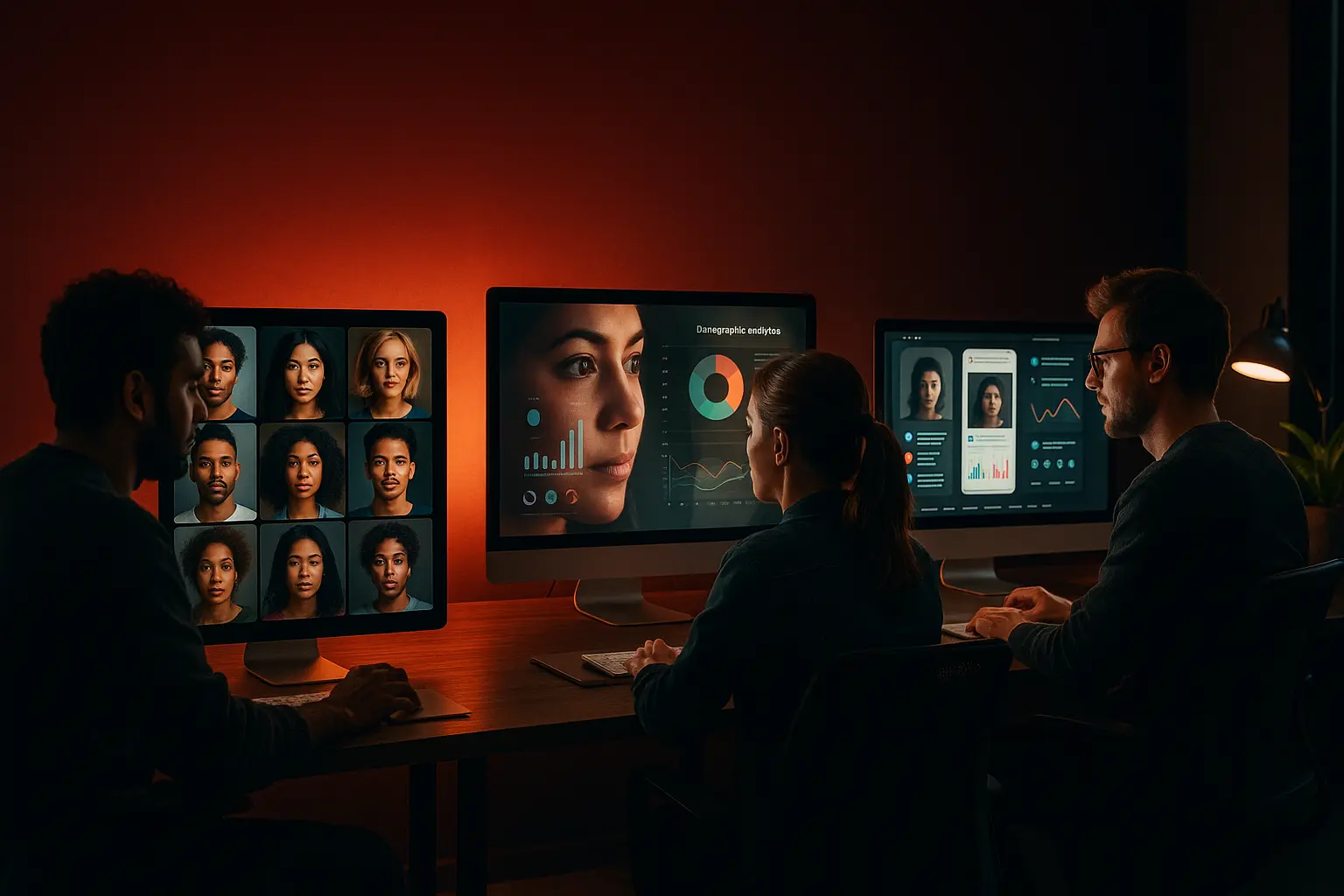
Picture strolling by a digital billboard, and catching sight of your own energy staring back. The hues reflect your current mood, the pattern appears almost familiar, and the tagline is almost the summary of your thoughts. It's not chance; it's the era of reflective design. In this new wave of creativity, brands employ AI-generated imagery that responds to their audience, combining personal information, generative art, and narrative to make every viewer feel understood.
Products such as Dreamina, driven by its clever AI photo generator, are making this dream a reality. Designers and advertisers can now create images that adapt according to user moods, playlists, or even social trends — making advertising more of an emotional mirror. These images don't merely talk to people; they talk like people.
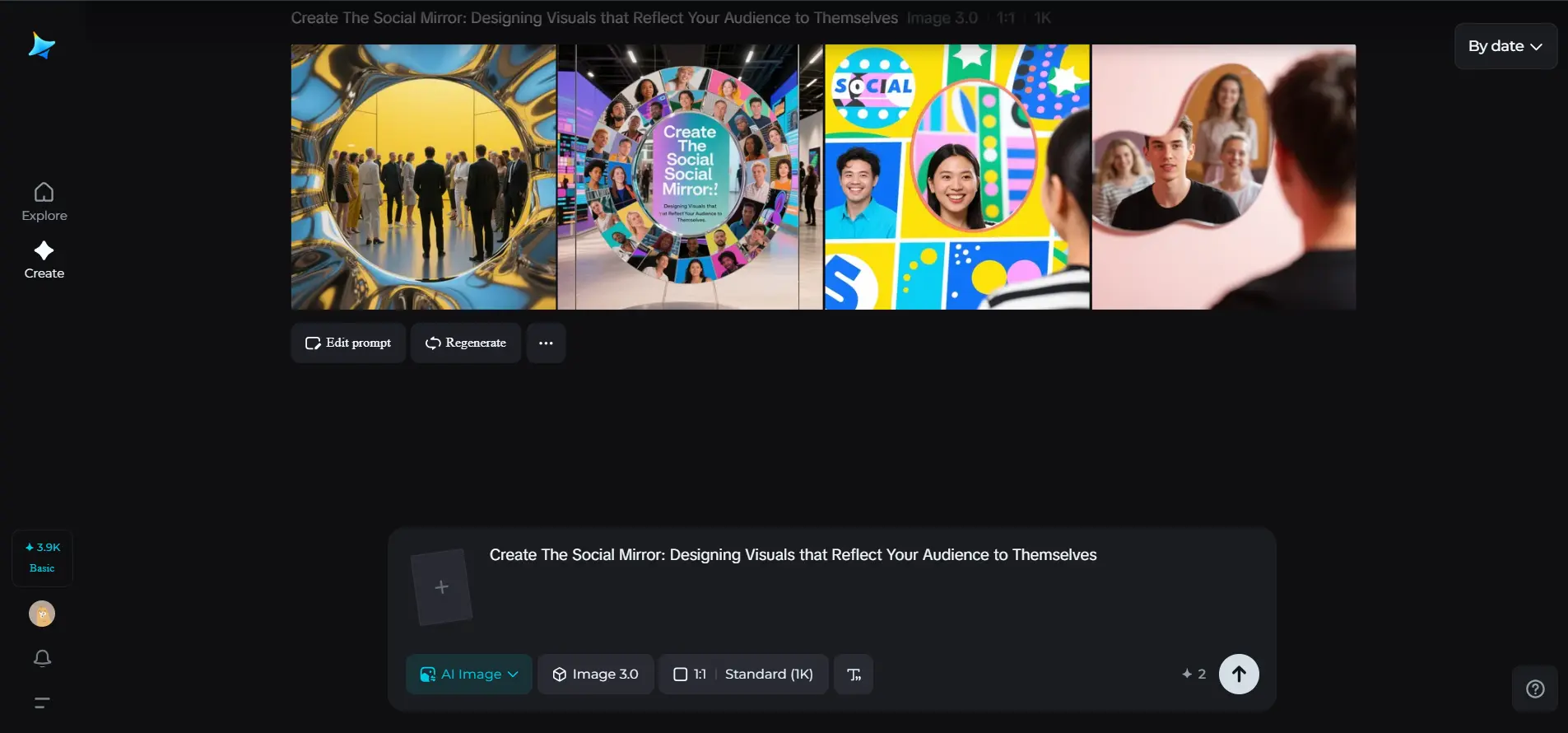
When design learns to recognize you
Personalization isn't a nicety in marketing anymore — it's the vocabulary of attention. But today's evolution of design is more than about reaching people by demographics or affinity. Emotional mirroring is the new territory. It's about visual elements that respond to your vibe, tone, or online presence, answering back in kind who you are — or who you aspire to be.
This strategy provides campaigns with a new type of closeness. A fragrance commercial can transition from sunrise colors to sunset colors according to the viewer's local time. A sneaker company can show textures that correspond to your city's present weather. Packaging designs can even change based on seasonal styles.
These reflective moments make humans feel observed, not sold to. And that's the magic — in recognition, not persuasion.
Brands as mirrors, not megaphones
Old-school advertising yelled. Reflective design listens. It reads cues from audiences — whether from social behaviors, likes, or live data — and translates them into responsive graphics.
When brands are mirrors, they:
- Construct empathy through responsive storytelling
- Invite engagement over passive viewing
- Design visuals that change with culture
- Enhance identity through community look
Visualize a campaign that isn't just initiated — it exists. Every user has a unique experience, influenced by their mood, passions, and fleeting feelings.
The psychology of reflection in visuals
Humans are attracted to recognition. We relate to what feels familiar — not only faces, but hues, shapes, and moods that resonate with our own frame of mind. That is why reflective design seems so engaging. It provides us with a moment of visual resonance.
AI software has a significant part to play here. By understanding emotional or contextual hints, they are able to create art that is truly human. A subtle palette change, lighting hue, or texture shift can turn a static picture into a reflection of the observer's reality.
Social mirror effect has nothing to do with narcissism — it's empathy. When individuals are made to feel reflected, they feel appreciated. When they feel appreciated, they remember.
AI as the creative empath
The advent of generative design brought this emotional mirroring within reach of artists around the globe. Using tools such as Dreamina, creatives are able to play with identity-sensitive imagery that can respond and change.
For example:
- Album art can change color in music apps based on your current playlist beat.
- Event campaigns can have visuals that shine differently at night compared to daylight.
- Companies can create posters that subtly reflect local fashion waves or cultural attitudes.
These aren't fixed campaigns. They're living moments — and Dreamina offers the creative sandbox for bringing them to life.
Designing emotional reflections with Dreamina
Step 1: Write a text prompt
To make your reflective image, open Dreamina and compose a rich text prompt that reflects the mood, tone, and emotional tone you desire. Paint the vibe you wish to achieve, rather than objects.
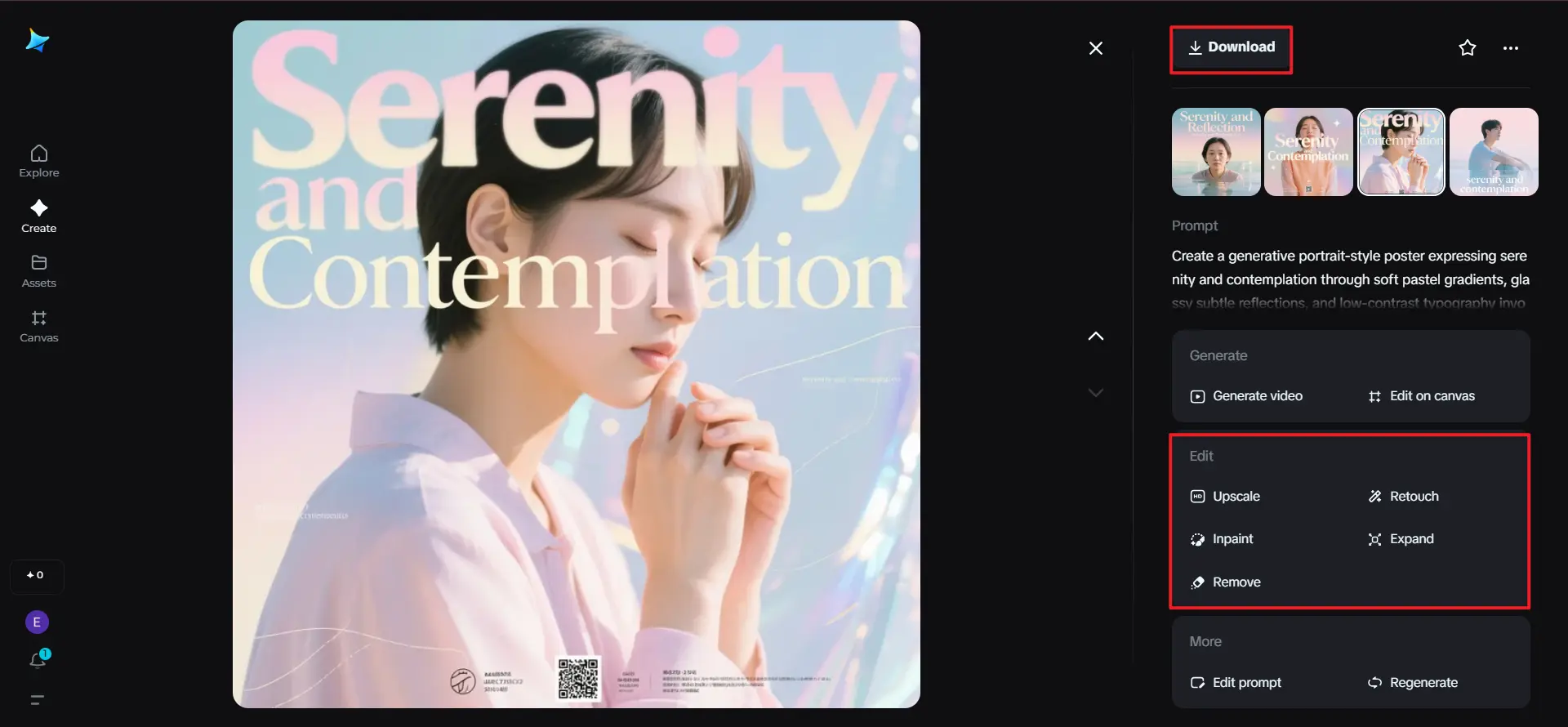
For instance: A generative portrait-style poster expressing serenity and contemplation through soft pastel gradients, glassy subtle reflections, and low-contrast typography invoking inner calm.
This type of descriptive prompt enables Dreamina's AI not just to interpret imagery, but emotional temperature as well — resulting in a result that has a sense of life and personality.
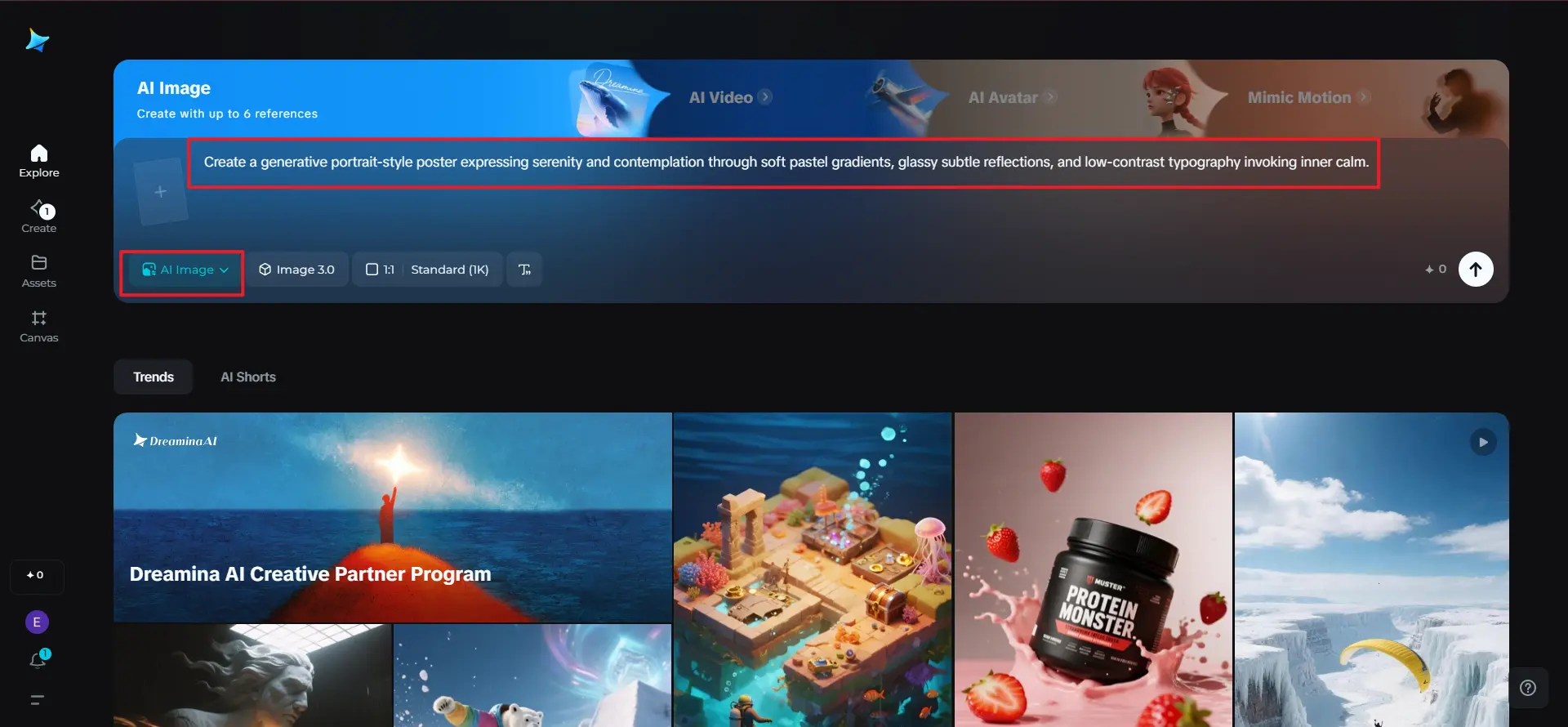
Step 2: Adjust parameters and create
After that, refine the visual output by changing the model, aspect ratio, size, and resolution (1k or 2k), depending on where your design will live — a digital campaign, social feed, or event projection. When you’re ready, click the Dreamina icon to render. You'll get a graphic in mere seconds that feels like it captured the emotional cue of your words.
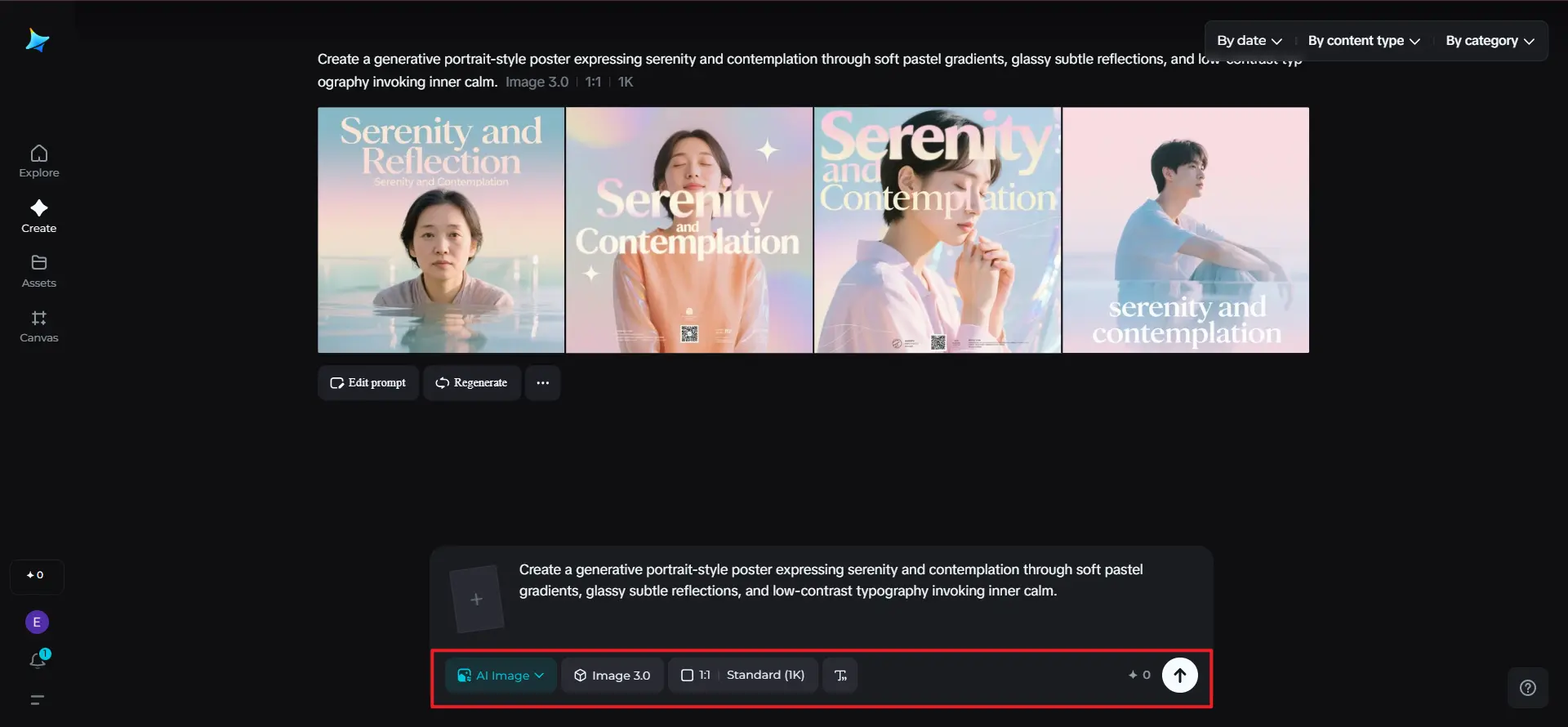
Step 3: Customize and save
Next, use Dreamina's AI capabilities, such as inpaint, expand, remove, and retouch to refine your work. They give you the ability to intensify reflection effects — modifying lighting, toning down tones, or introducing subtle motion textures. Click Download once you are content, and save your work and distribute it over campaigns or visual testing.
Beyond personalization: the emergence of emotional identity design
What makes reflective design so strong isn't simply that it's personal — it's that it feels communal. Such imagery tends to capture collective attitudes as much as personal ones. Consider a brand image that responds to cultural vibes, changing tone in the midst of celebrations or stillness.
This way, visual design becomes an act of empathy:
- Mood-reactive art: Ads that warm or chill on the basis of audience's feeling.
- Cultural reflection: Posters that adapt with trending symbols or colors.
- Community feedback loops: Visuals that respond to live interactions.
It's not data extraction — it's human connection through design smarts.
Logos that listen
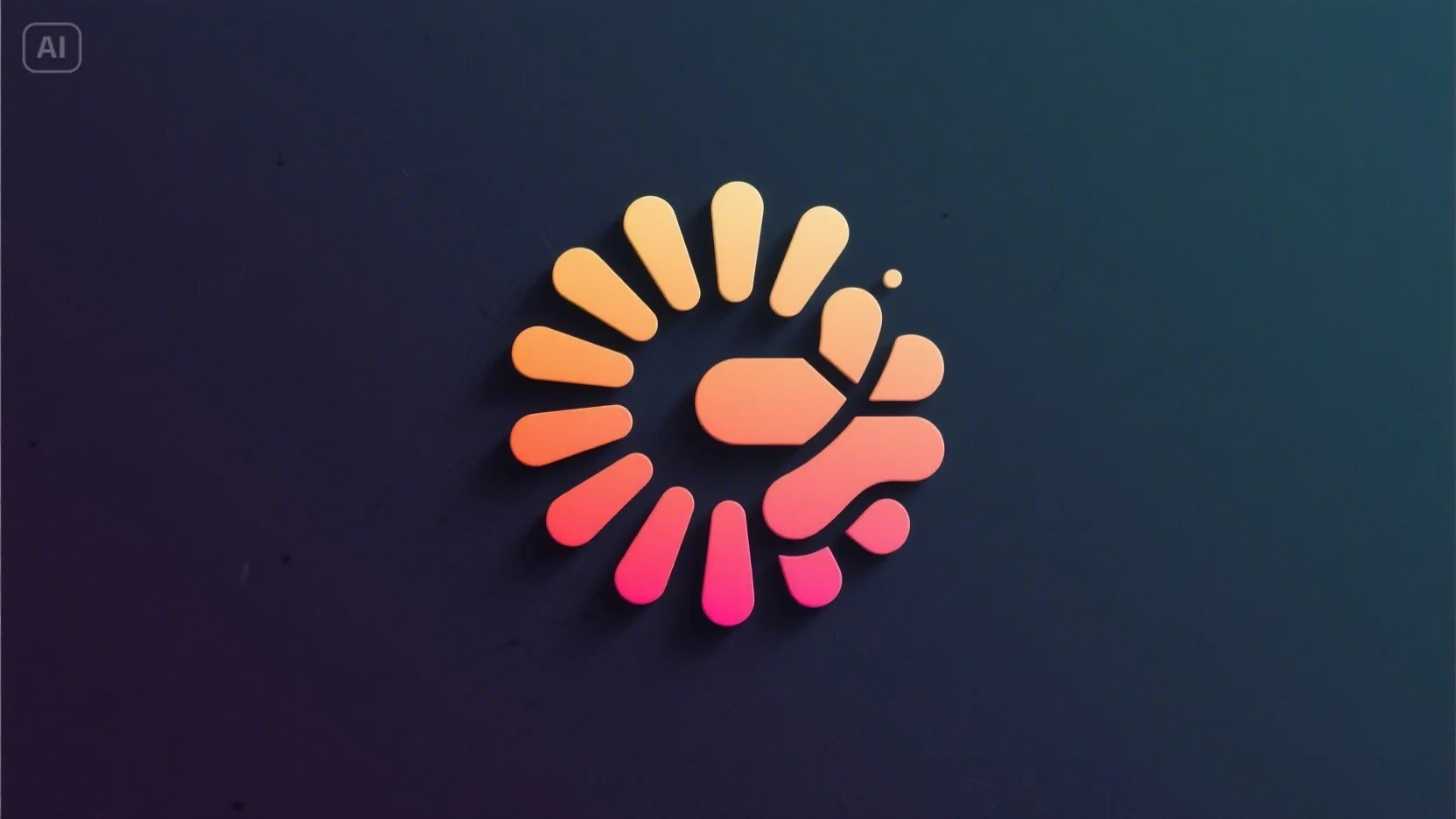
The idea of responsive visuals also beautifully carries over into identity work. With the use of Dreamina's AI logo generator, brands are able to create living symbols that adapt across contexts.
Imagine a logo that subtly changes colors depending on audience response — radiating warmer when engagement peaks or softer during slow periods. This new form of branding doesn't sound robotic; it sounds alive. It echoes the beat of the community it serves, turning the brand into a living, breathing entity rather than a dead mark.
The sympathy of movement and tone
In reflective branding, tone is a conversation. Empathy is communicated far more effectively by colors, shadows, and patterns than slogans ever could. Here's where Dreamina's AI poster generator comes into play — enabling designers to design campaign visuals that flex between moments, moods, and audiences.
For example, a concert poster can shine more brightly as social interaction grows, or shift into somber hues following the event, representing nostalgia. The poster does not only advertise — it recalls.
Through AI, design is not only a proclamation but a reaction.
The art of emotional resonance
Reflective design is both science and poetry. It's turning inaudible feelings into tangible form. It pushes the designer to transcend static representation and into a world of emotional choreography — where images breathe, react, and learn.
It's also an act of digital empathy. At a moment when internet experiences frequently come across as generic, thoughtful images bring back to people the recollection that they are understood — that the world of design is observing with them, not against them.
Conclusion
Empathy's future belongs to branding — and tools such as Dreamina are providing creators with the tools to craft it. With its robust generative intelligence and design control, Dreamina assists you in creating images that do more than awe — they engage.
When a campaign reflects its audience's mood, it crosses over from marketing to memory. In this era of the social mirror, brands don't merely sell stories; they mirror them — pixel by pixel, feeling by feeling.
Because the most potent design in the world doesn't merely speak to you. It stares back.