PR vs Marketing vs Advertising: What's the Difference in 2026?
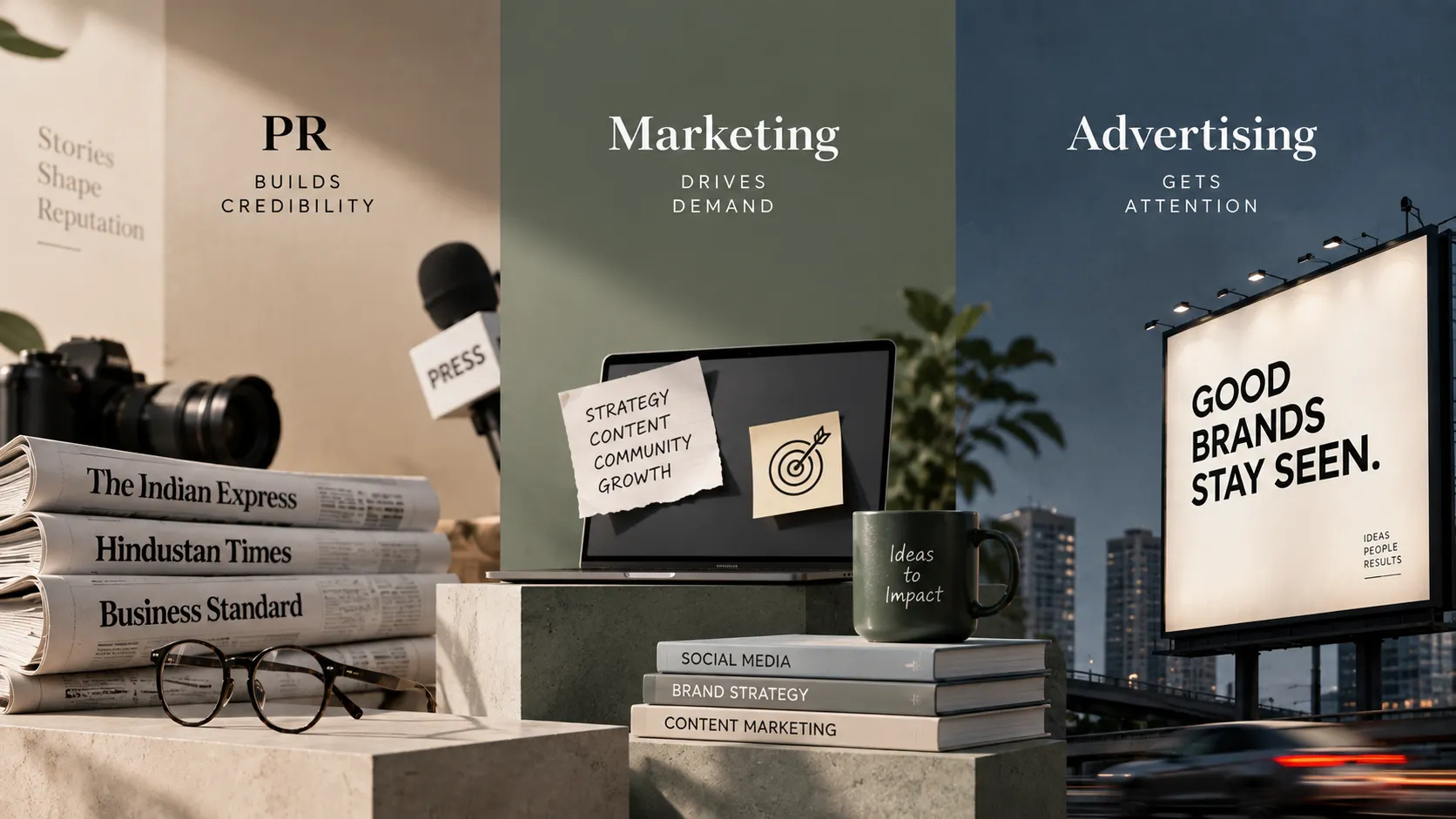
PR, marketing and advertising get used as if they mean the same thing, and they do not. Confusing them is why brands overspend on ads while their reputation stays thin, or expect PR to sell a product overnight. This guide explains all three in plain language, how they differ, and how they work together, so you know what each one does and which your brand needs first. It builds on our closer look at the difference between PR and advertising.
Figures reflect widely reported 2025 to 2026 buyer and AI-search research.
The simplest way to tell them apart
Here is the one-line version. Marketing is the whole strategy for reaching and converting customers. Advertising is the paid part of that strategy, where you buy space to deliver a controlled message. Public relations is the earned part, where you build trust and reputation through third-party coverage you influence but do not pay for. Marketing is the umbrella; advertising and PR are two tools under it.
PR vs marketing vs advertising, side by side
| Public Relations | Marketing | Advertising | |
|---|---|---|---|
| What it is | Earned reputation and trust | The whole customer strategy | Paid promotion |
| Who controls the message | You influence it; media decides | You set the plan | You control it fully |
| How it is paid | Earned, not paid for placement | Budget across channels | Paid per placement |
| What people trust | High (third-party credibility) | Varies by channel | Lower (seen as selling) |
| Main goal | Trust, reputation, credibility | Growth and conversions | Awareness and direct response |
| Time to work | Compounds over months | Ongoing | Fast, stops when you stop paying |
What marketing is
Marketing is the big picture: understanding your audience, positioning your brand, choosing channels, and turning interest into sales. Advertising and PR both sit inside marketing, alongside content, SEO, email and more. When someone says they need marketing, they usually mean the whole system, not a single tactic.
What advertising is
Advertising is the paid, controlled part of marketing. You buy the space, you write the message, and it runs exactly as you designed it. Its strength is control and speed: you can target precisely and see results fast. Its weakness is trust, because audiences know it is paid, and it stops the moment you stop paying.
What public relations is
PR is the earned part. Instead of buying space, you earn coverage by giving journalists and audiences something genuinely worth their attention. You influence the message, but a credible third party delivers it, which is why PR carries trust that advertising cannot buy. In 2026 this matters even more, because earned coverage is what AI answer engines cite when they describe your brand, the shift we explain in PR as the new SEO in the AI era. PR also comes in many forms, which we cover in our guide to the types of public relations work.
How they work together
The brands that win do not choose one. They use marketing as the strategy, advertising for reach and speed, and PR for the trust that makes everything else convert better. A product launch might use PR to earn credibility, advertising to drive immediate awareness, and marketing to tie it all to sales. Used together, each makes the others stronger.
A real-world example
Picture a new skincare brand launching in India. Marketing sets the plan: who the customer is, the positioning, the channels and the sales targets. Advertising buys Instagram and search placements to create fast awareness of the launch. PR earns a dermatologist quote in a national daily and coverage in beauty media, so that when a shopper checks the brand out, independent sources vouch for it. The ad created the click; the PR earned the trust that turned the click into a sale; marketing tied it all to revenue. Remove any one of the three and the launch works less well.
Common mistakes brands make
- Expecting PR to sell overnight. PR builds trust that compounds; it is not a direct-response channel like an ad.
- Relying on ads for credibility. Ads create awareness, but audiences know they are paid, so they do not build trust on their own.
- Treating the three as separate silos. They work best as one system, briefed together, not run by teams that never talk.
Which does your brand need first?
- Need trust and credibility? Start with PR. It builds the reputation buyers and AI engines rely on.
- Need fast, targeted awareness? Use advertising, but pair it with PR so the trust is there when people check you out.
- Need a full growth plan? That is marketing, with advertising and PR as tools inside it.
Frequently Asked Questions
What is the difference between PR, marketing and advertising?
Marketing is the overall strategy for reaching and converting customers. Advertising is the paid part of that strategy, where you control the message. PR is the earned part, where you build trust through third-party coverage you influence but do not pay for.
Is PR part of marketing?
Yes. PR and advertising are both tools within marketing. Marketing is the umbrella strategy; PR earns trust and reputation, while advertising buys awareness.
Is PR better than advertising?
They do different jobs. Advertising is fast and controllable but trusted less; PR builds durable trust and, increasingly, AI visibility, but compounds over time. Most brands need both.
Which should a small business invest in first?
Often PR, because credibility makes every other channel work harder, and earned coverage is more cost-effective than ads for building trust. Pair it with targeted advertising as budget allows.