Crisis Communication for Audio Deepfakes: The First 90 Minutes
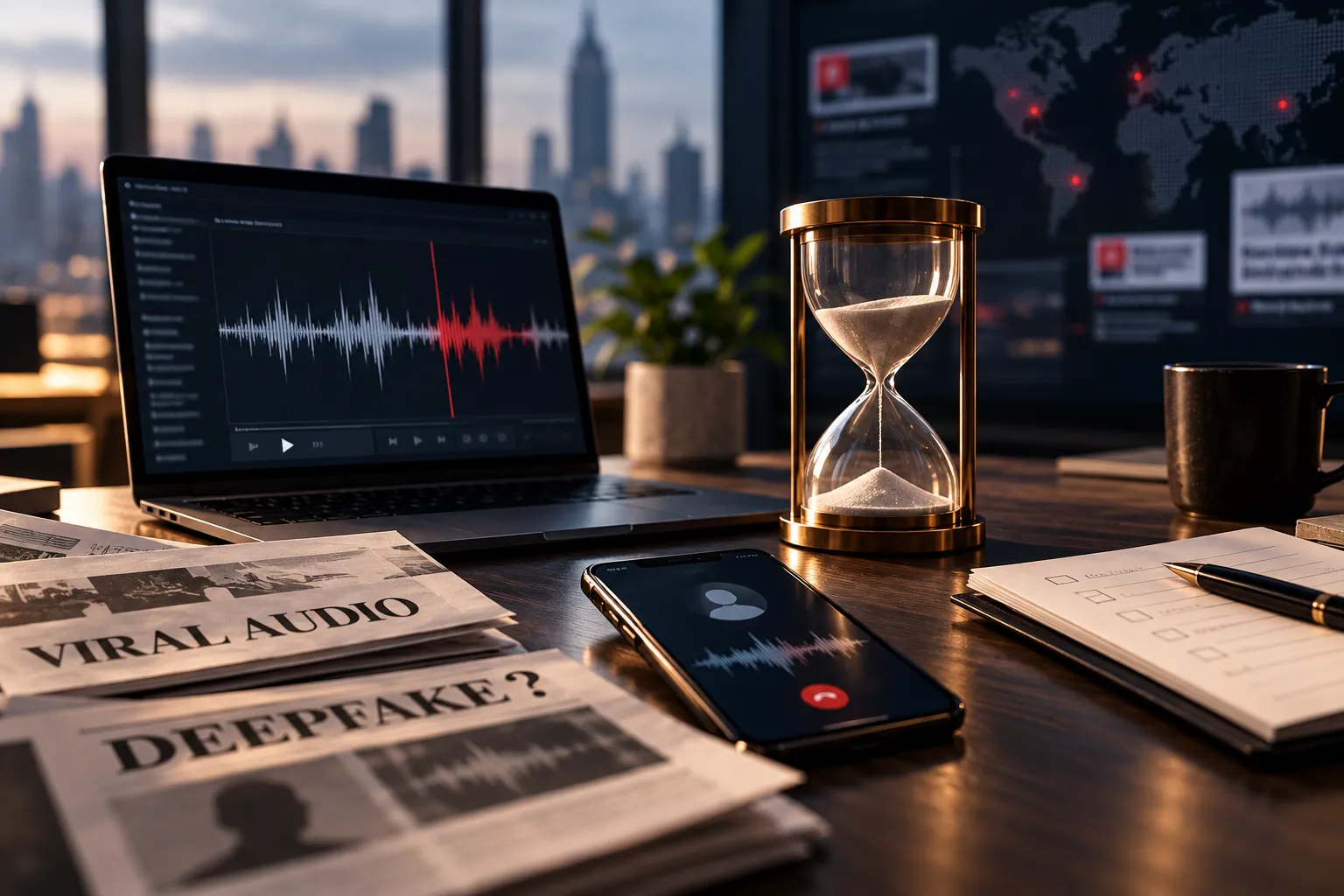
A voice note is circulating in a WhatsApp group. It sounds exactly like your CEO, and it says something the company would never say. By the time someone in the PR team sees it, it has already jumped to three more groups and a reporter has it. It is fake, generated in minutes from a few seconds of podcast audio, but that will not stop it from spreading. Most deepfake planning still assumes a fabricated video. Audio is the more dangerous threat, and the first 90 minutes decide how much damage it does.
Worth knowing: It is widely reported that convincing voice clones can now be produced from only a few seconds of a person's speech, and that audio-only fakes spread fastest through private messaging where fact-checks rarely reach. A crisis you cannot see coming needs a plan you built in advance.
Why audio deepfakes are harder to fight than video
The public conversation about deepfakes is heavily video-focused, and that focus leaves a blind spot. Audio is cheaper and faster to fabricate, it travels through the private channels where most Indians actually share news, and audiences have far fewer instincts for spotting a fake voice than a fake face. There are no visual tells, no odd blinking or warped background, only a voice that sounds right. That combination makes audio uniquely corrosive to corporate communications and executive reputation.
The First 90 Minutes: a response playbook
Speed and accuracy fight each other in a crisis. This timeline is built to protect both. Treat the windows as targets, not rigid rules, but the sequence matters.
Minutes 0 to 15: Activate and contain
- Trigger the crisis protocol. The first person to see the clip alerts the pre-agreed crisis team. No one debates whether it is real yet; activation is automatic.
- Preserve the evidence. Save the audio file, note where it appeared, who shared it and when. This record matters for verification, platforms and any legal step.
- Do not amplify. No one reposts, quote-tweets or forwards the clip to ask if it is real. Every share widens the reach you are trying to contain.
- Open an internal channel. Put the crisis team on one thread so decisions and facts live in a single place, not scattered across calls.
Minutes 15 to 45: Verify and prepare
- Confirm it is fake, precisely. Establish where the executive actually was, check calendars and genuine recordings, and document the specific reasons the audio is fabricated. Vague denials do not hold; specifics do.
- Brief leadership and align. Get the named spokesperson and the executive aligned on one version of the truth, so every channel says the same thing.
- Draft the holding statement. Prepare a short, clear statement that names the clip as fabricated, states the facts plainly, and says the company is acting. Keep it calm and factual, never defensive.
- Alert platforms and, if needed, counsel. Report the content to the platforms carrying it and loop in legal early if the fake is defamatory or tied to fraud.
Minutes 45 to 90: Respond and control the narrative
- Publish on your owned channels first. Post the statement where you control it, your site and verified social accounts, so there is an authoritative version to point to.
- Brief key stakeholders directly. Reach employees, major clients, partners and investors before they hear it elsewhere. Internal audiences forwarding your clear statement become your fastest defence.
- Give journalists the facts. Send trusted media the verified account and your statement, turning coverage from is this real into the company has confirmed it is fake.
- Start monitoring and logging. Track where the clip and your response are spreading, and keep a timeline. This guides the next hours and supports any legal or platform action.
The work that has to happen before the crisis
No team can improvise this well in 90 minutes. The response above only works if the groundwork is already done. The brands that survive an audio deepfake are the ones that prepared, which is the core lesson of every crisis communication plan worth having.
- A named crisis team with clear roles and a single decision-maker, reachable out of hours.
- Pre-approved holding templates for a deepfake scenario, so you are editing, not writing from scratch.
- Verified, claimed channels on every major platform, so your authentic voice is unmistakable and hard to impersonate.
- A reservoir of trust built through steady PR before the crisis, so audiences give you the benefit of the doubt. This is the reputation equity that forward-looking PR strategies build on purpose.
- A rehearsed drill so the team has run this scenario at least once before it happens for real.
A short example
Consider two companies hit by a fake voice note from their founder. The first has no plan. It spends the first two hours arguing internally about whether to respond at all, and by the time it posts a defensive denial, the clip owns the story. The second activates a protocol within minutes, verifies the fake in half an hour, and publishes a calm, specific statement on its own channels inside 90 minutes, with employees already forwarding it. Same attack, two outcomes. The difference was not luck or technology. It was preparation and speed, the same qualities that separate every recovered reputation from a lasting one, as seen when brands turn a reputation moment around.
Frequently Asked Questions
What is an audio deepfake?
It is a synthetic recording that clones a real person's voice using AI, making it sound as though they said something they never did. It can take the form of a fake voice note, a fabricated leaked call, or a manipulated clip from a real podcast or interview.
Why is the first 90 minutes so important?
Because audio deepfakes spread fastest in the first hours, through private messaging where corrections rarely follow. A fast, verified, authoritative response in that window can stop the clip from becoming the accepted story. See our full crisis communication guide for the wider framework.
Should we respond publicly or stay silent?
Silence lets the fake define you. The right move is a calm, factual statement on your owned channels that names the clip as fabricated and states the truth. What you avoid is amplifying the clip itself or reacting defensively before you have verified the facts.
How can we prepare before anything happens?
Build a named crisis team, pre-approve deepfake holding statements, verify and claim your channels on every platform, invest in steady PR that earns audience trust, and rehearse the scenario at least once. Preparation is what makes a 90-minute response possible.
Can a PR agency help with deepfake crises?
Yes. A PR partner builds the plan, drafts the templates, trains the team, and provides the media relationships and calm execution a live crisis needs. Explore our crisis and reputation PR services to prepare before you need them.
Do not wait for the voice note to build the plan. Public Media Solution prepares brands for AI-driven reputation threats and manages crises when they hit, from deepfake playbooks to live response. Explore our crisis and reputation PR services, or see how we work with brands across India.